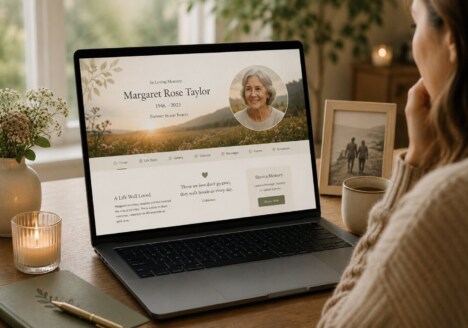

Every life contains stories that deserve more than a line of dates. The moments people remember most may be a habit that made everyone smile, a generous act, a family tradition or an adventure repeated at every gathering. A remembrance website can hold these details together, giving them a lasting place where family and friends can return.
The strongest memorial websites begin with the person rather than a fixed format. Photographs, colours, words and navigation can all be shaped around their character. For families exploring what a tailored tribute might include, our introduction to memorial web design for tributes offers a helpful starting point.
Choose the Stories That Reveal Character
A formal biography provides useful structure, but small stories often create the strongest sense of connection. The way someone welcomed visitors, the music they played in the car or the care they gave to a garden can reveal personality more vividly than a list of achievements.
Families do not need to include everything at once. Beginning with a few meaningful themes can make the process feel manageable. Childhood, family life, friendships, work, interests and favourite places are natural sections, but the final structure should reflect the life itself rather than forcing memories into unsuitable categories.
Give Photographs Useful Context
Photographs become more valuable when visitors understand the story behind them. A short caption can identify the occasion, location and people pictured, while a nearby paragraph can explain why that moment mattered. This turns a gallery into a narrative instead of an unexplained collection of images.
Organising photographs carefully also supports the long-term work of preserving family history with a website. Younger generations may recognise a relative’s face but not know where a photograph was taken or how different branches of the family were connected.
Invite Memories From Different Parts of a Life
No one person witnesses every chapter. Childhood friends, neighbours, colleagues and relatives will each hold different memories. Inviting their contributions can reveal unexpected stories and create a fuller picture, particularly when contributors are given gentle prompts rather than being faced with an empty form.
Questions such as “What always made you laugh together?” or “Which quality do you remember most?” can help people begin. A well-designed website where visitors can leave tributes provides a clear way to collect these responses while allowing the family to maintain a respectful tone.
Make the Experience Calm and Accessible
Remembrance website design should make reading and reflection effortless. Clear headings, comfortable text sizes and generous spacing help visitors move through the content without distraction. Simple navigation is especially important for older relatives or anyone who does not use websites regularly.
The site should work equally well on a phone, tablet or computer. Descriptive image text, strong contrast and clear controls make the tribute accessible to a wider audience. These practical decisions are part of the care behind the memorial, ensuring that the stories can be reached by everyone they matter to.
Allow the Collection to Develop Naturally
A memorial website can begin with the material already available and grow over time. Another photograph may emerge from an old album, an anniversary may prompt a new reflection, or a distant friend may make contact after discovering the tribute. Flexible organisation allows these additions without disturbing the calm structure.
Building around the stories that matter creates more than an online archive. It creates a place where personality remains visible, relationships can be understood and memories can continue to be shared. With sensitive memorial web design, those stories stay close and accessible for both today’s visitors and future generations.