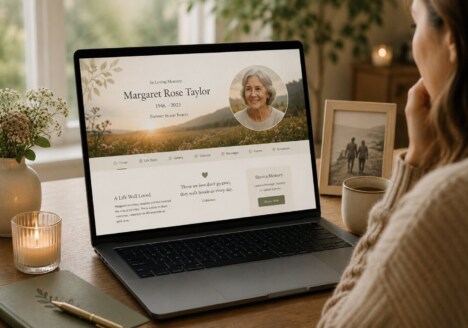

A remembrance website can become more than a page of information. With thoughtful planning, it can offer families a calm digital place to return to when they want to share a story, revisit a photograph or introduce someone to a loved one they never had the chance to meet. Good Remembrance Website Design gives those moments room to breathe, while considerate Memorial Web Design makes sure the experience feels personal rather than generic.
That balance matters because people arrive at a memorial website with different needs. One visitor may want to read a life story from beginning to end. Another may be looking for a particular photograph, a service detail or a message left by a friend. The design should support both kinds of visit without making the site feel busy. Clear navigation, generous spacing and a warm visual tone can quietly guide people while keeping the focus on the person being remembered.
Begin with the shape of the person’s story
The strongest memorial websites usually start with the story rather than a template. Before choosing colours or arranging pages, it helps to gather the details that made the person recognisable: the places they loved, the phrases they used, the work they cared about, the people who shaped their life and the small routines family members still notice in their absence. These details give the website a distinctive character that stock layouts cannot provide.
A useful structure might include a welcome page, a fuller life story, a gallery, memories from family and friends, and practical information such as a funeral service or charitable request. Those sections do not need to feel separate from one another. Short introductions can connect them, while repeated visual cues help visitors understand where they are. A carefully written opening message can also explain how the site is intended to be used, whether that means adding a memory, browsing quietly or returning on an anniversary.
Recent ideas around the moments families return to show why this planning stage is so valuable. A remembrance website is rarely visited only once. Its content should work for the first-time visitor and still feel meaningful months or years later.
Make memories easy to find and easy to add
Memorial content often arrives in different forms. There may be scanned letters, phone photographs, short messages, long recollections and contributions from people who live far away. Memorial Web Design should allow these materials to sit together naturally, without requiring every contributor to understand a complicated system. A simple invitation to share a memory, supported by clear guidance about image sizes and wording, can make participation feel welcoming.
Organisation is just as important as participation. A gallery can be grouped by period, place or theme, but it should not force visitors through a maze of filters. A timeline may help with major events, while a collection of everyday memories can reveal the personality behind the dates. Searchable names, descriptive captions and accessible text also make the website more useful for relatives who are discovering the story gradually.
It is worth considering how different devices will be used. Someone may read a tribute on a laptop at home, then open the same page on a phone while travelling to a meaningful place. Comfortable text sizes, touch-friendly links and images that load sensibly all contribute to a more respectful experience. These practical choices are part of remembrance: they reduce friction at a time when visitors may already feel emotionally tired.
Use design to create a sense of welcome
Colour and typography can express character without becoming decorative for its own sake. A favourite shade, a landscape-inspired palette or a subtle reference to a hobby can make the site feel connected to the person. Soft contrast and restrained type choices often work well because they keep reading comfortable and allow photographs to remain the emotional centre of the page.
Personalisation can also come through the rhythm of the content. A short quotation might introduce a section, while a handwritten note or familiar image can be given space as a focal point. The aim is not to fill every area, but to create pauses. Visitors should be able to move through the site at their own pace, with enough negative space for a photograph or sentence to have its full effect.
As explored in designing a remembrance website that lets every voice belong, an inclusive layout can make contributions feel equally valued. Family members should not have to compete for attention; the design can give each memory a clear, dignified place.
Design for return visits and changing memories
A living memorial website should be able to grow gently. Families may add a new photograph after finding an old album, write something on a birthday or create a page for a significant anniversary. This does not mean the design needs constant reinvention. A flexible content structure, consistent labels and an easy-to-update gallery can keep the website coherent as its archive becomes richer.
It is helpful to decide how additions will be reviewed and organised. A named family editor or a small group of contributors can protect the tone of the site while still allowing many voices to be heard. Dates and captions should be checked, privacy preferences respected and older pages kept easy to reach. These small editorial habits prevent the website from becoming an unstructured collection of files.
The idea of a remembrance website that grows with a family’s memories is ultimately about continuity. The site can hold the original tribute while leaving room for later reflections, new generations and stories that might otherwise be forgotten.
Create a lasting digital place for remembrance
Effective Remembrance Website Design is measured by how naturally it serves people. It should be clear enough for a visitor who has arrived for one detail, warm enough to encourage a shared memory and durable enough to remain useful as time passes. When the structure, writing, imagery and technical experience work together, the result feels less like a static announcement and more like a carefully kept family space.
Memorial Web Design cannot remove grief, but it can help families care for a shared record of someone’s life. By beginning with the person’s character, making contributions simple, choosing a welcoming visual language and planning for future visits, a memorial website can remain quietly present—ready whenever someone needs to remember, learn or tell the story again.