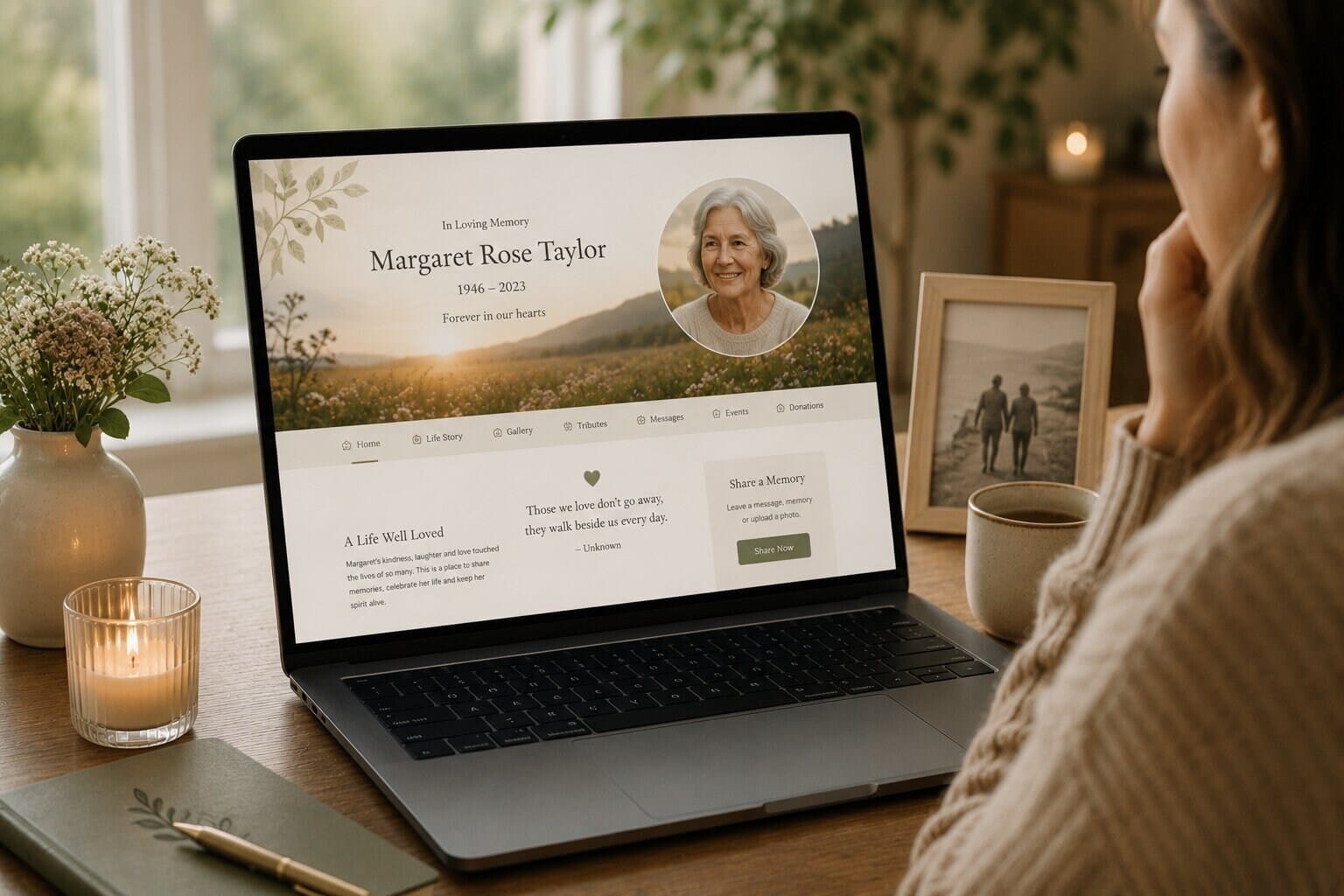
A life is remembered through more than major dates and formal milestones. Families often hold closest the ordinary details: a phrase someone always used, the way they made tea, a favourite walk, or the story behind a well-worn photograph. Thoughtful Remembrance Website Design gives these small memories a lasting place beside the wider life story.
Start with the details people naturally share
When relatives and friends begin talking about someone they miss, the most vivid memories are often surprisingly simple. One person remembers a laugh; another recalls a weekly routine or a generous habit. Collecting these details helps a memorial feel recognisable and human rather than like a formal record.
A useful starting point is to ask open questions: What made this person feel at home? What did they always notice? Which stories still make people smile? The answers can guide the tone, imagery and structure of the website. Our article on designing a memorial website around the ways families remember explores how different voices can shape a shared tribute.
Give short memories room to stand on their own
Not every contribution needs to become a long biography. A two-sentence recollection can carry great emotional weight when it is presented clearly. Short memories can be grouped by theme—family life, work, friendship, hobbies or humour—or placed beside the photograph that prompted them.
Good Memorial Web Design uses readable type, generous spacing and simple navigation so these fragments never feel crowded. Visitors should be able to pause with one story, then continue only when they are ready. This calm pace is part of what makes a memorial website a space for quiet reflection.
Add context that future generations will understand
A memory that is obvious to one generation may be mysterious to the next. Captions can name the people in a photograph, identify a place and explain why the moment mattered. A scanned recipe, letter or ticket becomes more meaningful when a few lines describe its connection to the person.
This context turns personal recollections into a richer family archive. It also supports preserving family history with a website, ensuring that names, relationships and everyday experiences remain understandable rather than becoming disconnected items.
Welcome contributions without pressure
Some visitors will want to write immediately, while others may prefer simply to read. A gentle invitation can make both choices feel acceptable. Families might ask for a favourite saying, a lesson learned or a small moment that captures the person’s character, without expecting a polished piece of writing.
Moderation gives the family control over what appears publicly and allows spelling, names or dates to be checked before publication. One or two trusted people can review new material and place it in the most suitable section, keeping the memorial coherent as it grows.
Let the tribute develop at a comfortable pace
Small stories often surface gradually. A conversation, an anniversary or a newly found box of photographs may bring another memory forward months or years later. A flexible remembrance website can accept these additions without making the original tribute feel unfinished.
The result is a memorial that reflects not only what someone achieved, but how it felt to know them. By preserving familiar details alongside the larger story, a website can help relatives, friends and future generations encounter a personality rather than a list of facts. That is where sensitive Remembrance Website Design becomes most valuable: it keeps the texture of a life close.