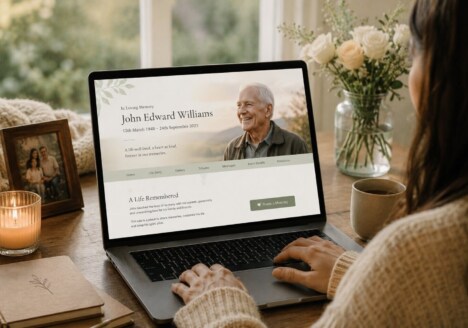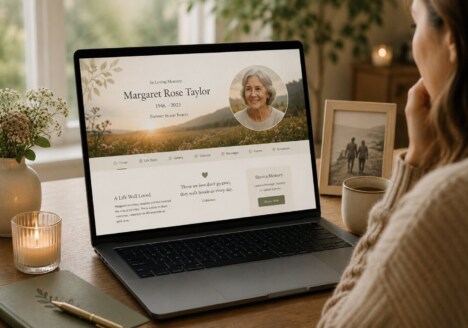
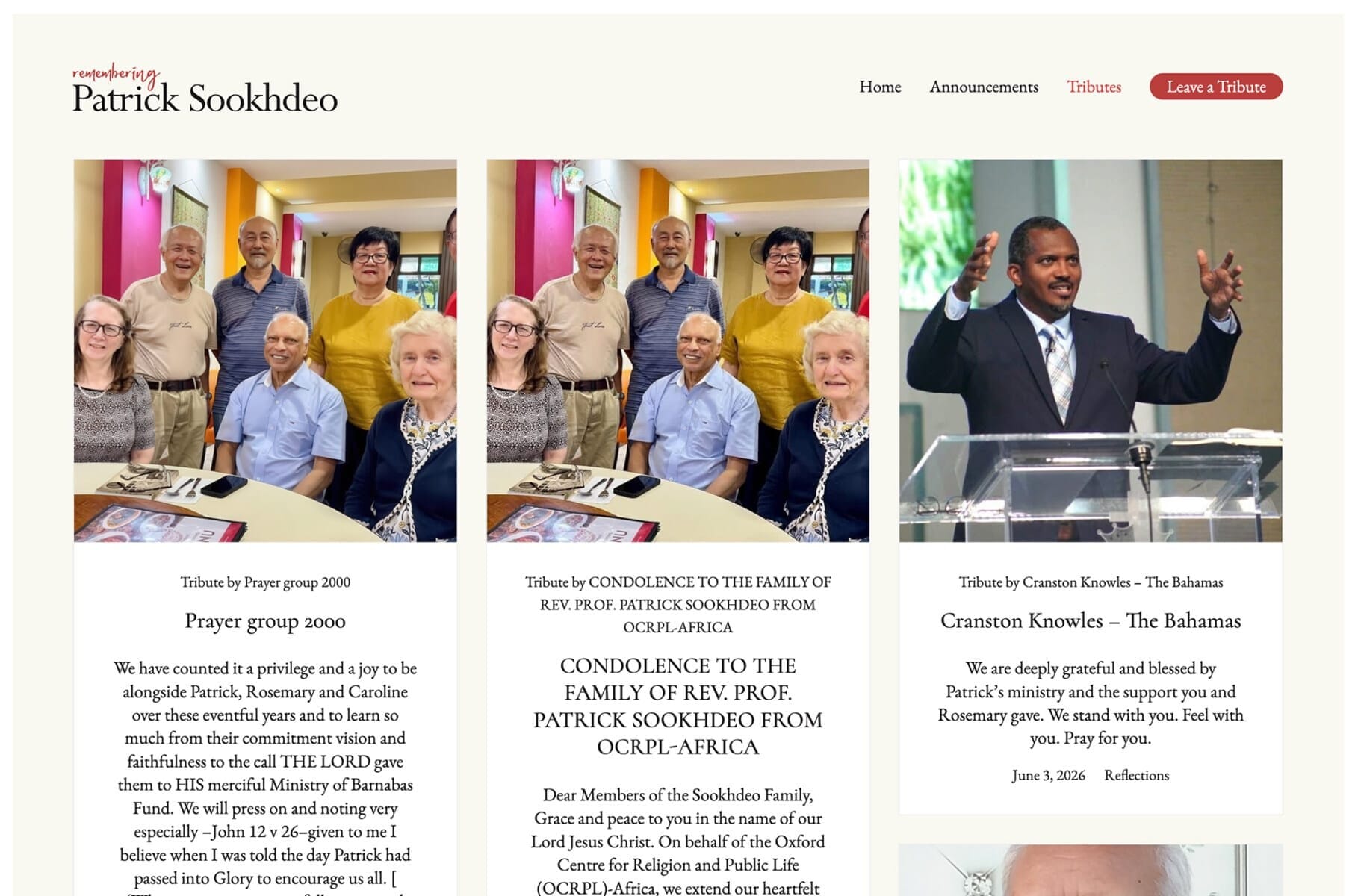
A memorial website is often created soon after a loss, when family members are gathering photographs, sharing stories and trying to make thoughtful decisions together. But the most meaningful remembrance websites are not finished when they launch. They become gentle, living spaces where memories can be added as people remember more, where younger relatives can discover a family story, and where important dates can be acknowledged without pressure. Good remembrance website design makes room for that gradual process.
Begin with the family’s real patterns of remembrance
Memorial web design works best when it starts with how people already remember someone. A family may return to a favourite photograph, tell the same story about a much-loved habit, or gather every year for a birthday, anniversary or special walk. Those patterns can guide the structure of the website. Instead of treating the site as a fixed biography, it can become a calm collection of places: a life story, a gallery, a timeline, a guestbook and a section for new memories.
This approach also helps families decide what belongs on the first version and what can wait. One person may have the photographs, another may know the childhood stories, and someone else may be best placed to write about work, friendships or community life. A clear structure allows each contribution to sit naturally alongside the others. It avoids the feeling that one person must write a perfect account of an entire life before the site can be shared.
A strong starting point is to consider the moments visitors will most want to find. Someone may arrive looking for a particular photograph, a funeral reading, a message from a friend or a simple way to leave a tribute. Navigation should make these needs obvious, with descriptive labels and a page layout that feels reassuring on a phone as well as a larger screen.
Use design to hold detail without creating noise
Remembrance website design needs visual restraint, but restraint does not mean the result has to feel plain. A carefully chosen colour palette, generous spacing and readable typography can create a sense of calm while allowing photographs and words to carry the emotional weight. Decorative choices should support the person being remembered rather than competing for attention.
Personal detail can be introduced through meaningful, modest decisions. A favourite colour might appear in buttons or headings. A landscape photograph could influence the tone of the background. A line from a poem, a handwritten signature or a familiar place could inspire small visual touches. These details help a memorial website feel individual without turning it into a heavily designed marketing page.
Content also needs room to breathe. Long memories are easier to read when divided into short paragraphs with useful subheadings. Galleries benefit from captions that explain who is pictured or where a moment took place. Alt text and strong contrast make the site more welcoming to people using assistive technology, while compressed images help it load reliably for relatives visiting from different locations.
Make the website easy for many voices to share
A memorial website can bring together people who live far apart, but only if contributing feels straightforward. Families should be able to understand where to send a memory, how a photograph will be used and whether a message will be reviewed before it appears. A simple invitation can be more effective than a complicated contribution system: ask visitors to share a story, a photograph or a sentence about what they will remember most.
This shared approach is one of the strengths of a tribute website. It gives different generations permission to remember in different ways. A grandparent may contribute a detailed story, while a child may add a drawing or a few words. A friend from work may remember a quality the family never saw at home. Together, these perspectives create a fuller and more human picture.
It is helpful to establish a gentle editorial process before launch. One trusted person can check names, dates and permissions, while still preserving the natural voice of each contributor. Clear guidance can prevent accidental oversharing and make it easier to discuss which photographs feel right for a public site and which should remain private to the family.
Design for the moments families return to
The value of a memorial website often becomes clearer months or years after it is created. Visitors may return on a birthday, during a difficult week, or when they want to introduce a new family member to someone they never met. The design should support these quiet visits. A visible search or simple menu, stable page addresses and an uncluttered homepage all make returning feel familiar.
Regular additions can be welcomed without turning remembrance into a schedule. A new photograph from an old album, a note about a family tradition or a memory shared after a conversation can be added when it feels right. This is why a remembrance website that grows with a family’s memories can become more valuable over time: it reflects the way understanding continues to develop.
The website should also acknowledge that not every visitor wants to read every section. Some people will want a quick look at the gallery, while others may spend time with a detailed life story. Clear signposting gives visitors control over their journey and keeps the experience respectful.
Leave room for a lasting family legacy
The best memorial web design balances permanence with flexibility. It should feel dependable enough to revisit, yet open enough to receive new stories. A thoughtful plan for domain renewal, backups, privacy and future stewardship helps protect the website as a family resource. Someone should know how to make small updates and who can take responsibility if circumstances change.
Most importantly, the site should sound like the person and the people who loved them. Polished design cannot replace warmth, specificity or honesty. When structure, accessibility and visual tone are guided by real memories, the result becomes more than an online notice. It becomes a welcoming place where a life can be encountered through many voices, and where remembrance can continue unfolding in its own time.
For families considering the wider possibilities of memorial web design, the guiding question is simple: what would help someone feel close to this person today, and what might help them feel that connection years from now? Building around that question creates a website with room for both memory and the future.