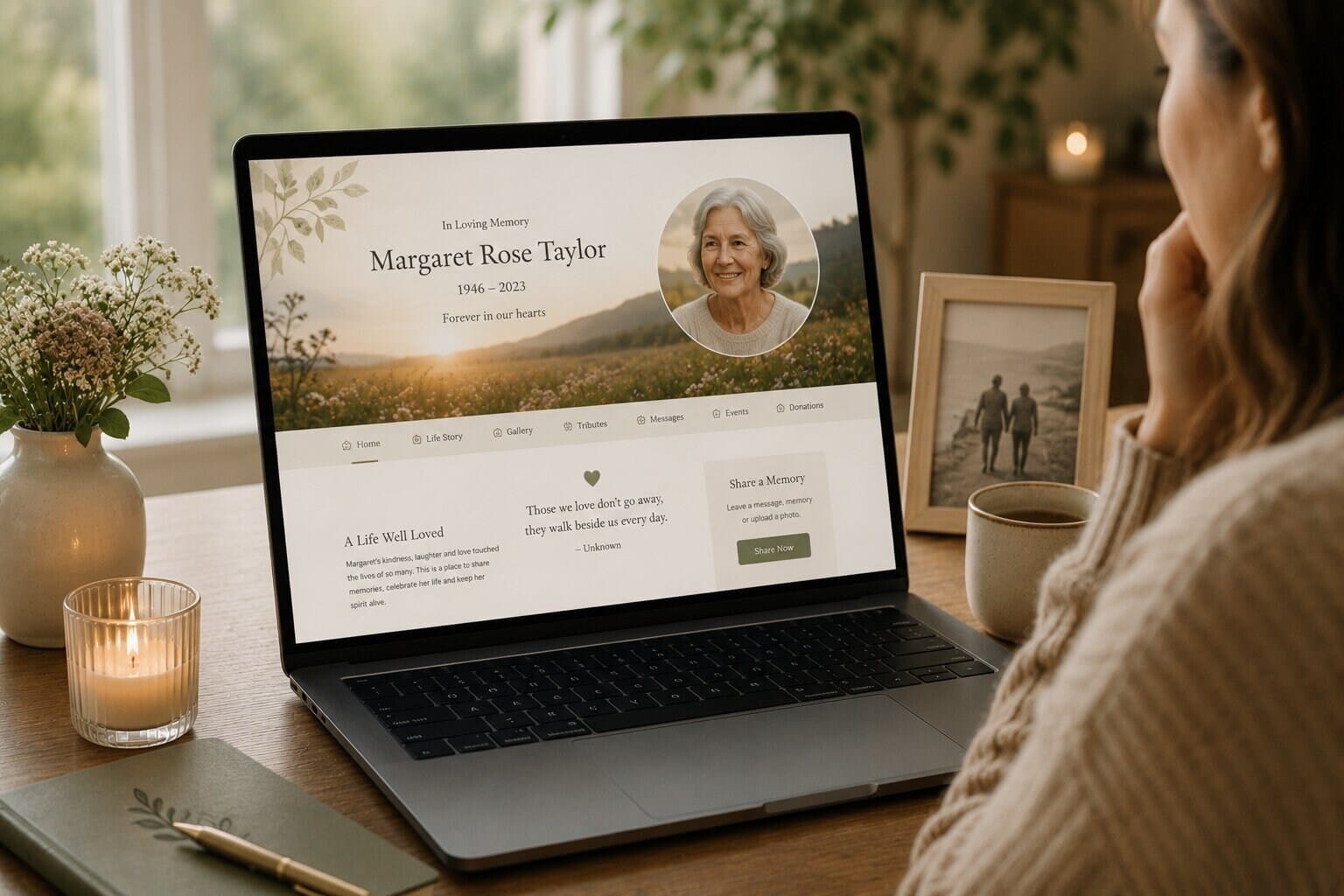
A family rarely remembers someone in a single, tidy story. One person may hold the details of a working life, another may remember a favourite saying, and someone else may have a folder of photographs that has not been opened for years. A thoughtful remembrance website gives those different kinds of memory somewhere to meet. It can become a calm, welcoming place where a life is represented with warmth, detail and room for contributions that continue to arrive.
Good Remembrance Website Design is not about filling a page with every available feature. It is about helping visitors find their way through a real human story. The best structure feels gentle rather than demanding: a clear introduction, familiar photographs, meaningful milestones and invitations to share memories when people feel ready. When the design respects the emotional reason people have arrived, the website feels less like an archive and more like a place the family can return to.
Begin with the shape of the person’s story
Before choosing layouts or colours, it helps to think about the different layers that made a person who they were. Their story may include family relationships, friendships, work, hobbies, places they loved, small routines and the values they passed on. A memorial website can acknowledge all of these without forcing them into a formal biography. Short sections, captions and carefully chosen quotations often communicate character more naturally than a long block of text.
This is where an adaptable page structure matters. A welcome section might offer the essential details, while later sections allow the family to explore the life in more depth. A timeline can provide orientation, but it should not suggest that a life is only a sequence of dates. Pairing milestones with photographs, personal recollections and everyday details gives visitors a fuller sense of the person behind the events.
Families can take inspiration from the different ways memories are noticed. A story about a garden, a recipe or a familiar journey may be just as important as a major achievement. Making space for those details helps a website reflect a whole life rather than a résumé.
Make different contributions feel equally welcome
Not everyone writes about grief in the same way. One visitor may want to leave a long tribute, while another may only feel comfortable adding a photograph, a line of poetry or a brief memory from childhood. Memorial Web Design should make all of these contributions feel valid. A simple, uncluttered contribution area can reduce hesitation, especially when the invitation explains what people may share and how their words will be cared for.
It is also useful to consider how a family will look after the website over time. Someone might add a memory close to the funeral, while another contribution may emerge months later after an old box or phone has been discovered. A flexible design can accommodate new galleries, stories and anniversaries without making the original content feel unfinished. This continuing quality is one of the reasons a dedicated memorial website can become meaningful beyond its first publication.
Clear permissions and considerate moderation are part of that welcome. Families should be able to decide who can contribute, whether submissions are reviewed before appearing, and how personal information is handled. These practical choices protect the tone of the space while allowing more voices to be included. The result is a shared story that does not belong to only one author.
Design for quiet visits as well as shared occasions
A remembrance website may be visited during a busy gathering, late at night, or on an anniversary when emotions are close to the surface. The experience should work in all of those moments. Readable type, generous spacing and calm navigation allow visitors to move at their own pace. Important information should be easy to find, but the page should not feel crowded with competing buttons, animations or messages.
Mobile access is especially important because many people will arrive through a link in a family message. Photographs should load cleanly, captions should remain legible and interactive elements should be comfortable to use on a small screen. Accessibility also means considering colour contrast, descriptive image text and a logical heading structure. These decisions are quiet acts of care: they help older relatives, visitors with disabilities and people using different devices participate in the same memorial space.
A restrained visual identity can support remembrance without becoming impersonal. A favourite colour, landscape, pattern or type style may provide a subtle connection to the person being remembered. The design should guide attention towards the photographs and words, allowing personality to lead instead of relying on decoration. For further perspective, simplicity in meaningful memorial web design is often what gives a page its lasting calm.
Let the website grow with the family
The first version of a remembrance website does not need to contain every story. In fact, leaving space for the family to add to it can make the website feel more truthful. Memories often surface through conversations, old photographs and familiar places. A section for new tributes, a guestbook or an occasional story can give that process a visible home without turning remembrance into a task.
Dates can provide gentle reasons to return: a birthday, an anniversary, a favourite seasonal tradition or the opening of a new photo album. These moments need not be presented as alerts. A simple calendar of remembrance or a collection organised by theme can help visitors rediscover the site naturally. The design should make returning feel welcome, whether someone visits every week or only when a particular memory comes to mind.
Over time, the website can become a record of both the life that was lived and the connections that remain. As the connections that remain become visible through shared words and images, a memorial space can offer comfort without pretending that grief is simple. It gives people somewhere to listen, contribute and remember together.
Create a lasting place with care
The most successful Remembrance Website Design begins with empathy and ends with practical care. It brings together a clear story, welcoming contribution paths, accessible presentation and a structure that can evolve. Every decision should answer a simple question: will this help someone feel closer to the person, the family or the memory they came to find?
When the answer is yes, the website can do more than display information. It can hold the small details that might otherwise become harder to share, connect relatives who remember from different places and give future generations a thoughtful way into a family story. That is the quiet strength of memorial web design: it creates a digital place where remembrance can remain personal, open and alive.