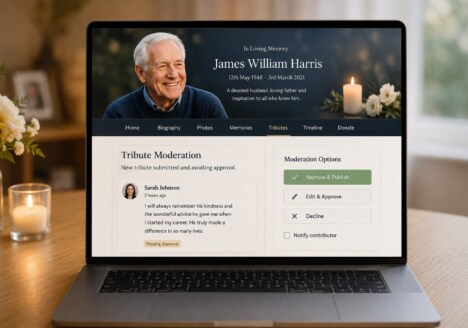

A remembrance website can become a gentle place for a family to return to, whether they are gathering on an anniversary, sharing a newly remembered story, or simply missing someone. Thoughtful Remembrance Website Design gives those moments room to unfold without making the experience feel busy or impersonal.
Begin with the memories people want to revisit
The strongest memorial websites are shaped around real habits of remembrance. A family may want to read a short tribute, look through photographs, listen to a favourite piece of music, or add a memory of their own. Planning these paths first helps the site feel natural. It also ensures that important details are easy to find on a phone, where many visitors will view the site.
A clear welcome page can introduce the person with warmth, while a simple timeline or story section gives visitors an unhurried way to learn more. Families considering a shared space may also find inspiration in how memorial web design helps a family keep telling the story over time.
Make space for different kinds of tribute
Not everyone remembers in the same way. One visitor may write several paragraphs; another may leave a single sentence, photograph, or quiet message. A flexible memorial website welcomes both. Sections for memories, readings, photographs, and messages can give each contribution its own place without forcing every story into the same format.
It is worth considering privacy and moderation from the beginning too. Some families want a fully public tribute, while others prefer a private or invitation-only website. Clear choices about who can contribute and how new material is reviewed help the website remain comfortable for everyone.
Design for calm, clarity and continuity
Memorial Web Design works best when visual decisions support reflection. Generous spacing, readable type, restrained colour, and carefully chosen images can create a sense of calm. Navigation should stay visible and predictable, with descriptive labels that make sense to visitors who may be arriving in an emotional moment.
Continuity matters as well. A remembrance website should be able to grow as relatives discover more stories or reach new anniversaries. A structure that supports additions without needing a complete redesign means the site can remain useful for years. This is one reason to plan the content in flexible sections rather than treating the first launch as a finished archive.
Help every visitor feel included
Families often span generations, devices, and levels of technical confidence. Large tap targets, strong contrast, captions for video, descriptive image text, and a layout that works well on smaller screens all make a meaningful difference. The goal is not to add complexity, but to remove barriers between a visitor and the memory they came to find.
A thoughtful approach can also make room for many voices. Designing a remembrance website that lets every voice belong shows how a shared tribute can welcome different perspectives while keeping the overall experience coherent.
Let the website become part of family life
The most enduring memorial websites are not only archives. They become places where people mark birthdays, anniversaries, and small discoveries. A family might add a photograph from an old album, record a story for younger relatives, or return to a favourite memory together. Over time, these contributions create a living picture of a whole person rather than a single moment of loss.
That lasting quality begins with a design that is personal, practical, and easy to care for. If the website makes it simple to return, contribute, and reflect, it can offer comfort long after launch. For more ideas on building a lasting digital tribute, explore creating a memorial website that honours both life and legacy.