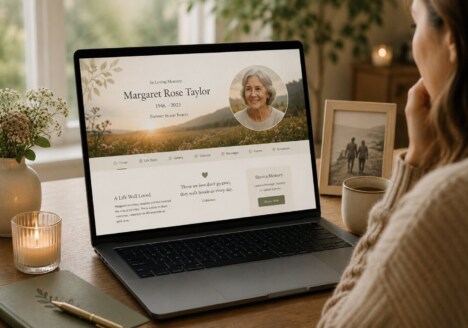

A life is often remembered through moments rather than a simple list of dates. A familiar holiday, a favourite saying, a family celebration or an act of kindness can reveal more about someone than a formal biography alone. Thoughtful Remembrance Website Design gives these moments a clear and lasting place, helping visitors understand the person behind the facts.
Begin with the memories people naturally share
When relatives and friends talk about someone they miss, certain stories return again and again. Those memories are valuable clues for planning a memorial website. They identify the experiences, relationships and qualities that mattered most and can guide the themes used throughout the tribute.
Gathering material does not need to feel like a formal interview. A few open questions about favourite places, proud moments, daily routines and personal interests can encourage warm, specific recollections. A website where people can leave tributes can continue that process by welcoming stories from a wider circle after the memorial is published.
Create chapters that feel natural
A chronological timeline is useful, but it is not the only way to organise a life story. Sections might focus on family, friendships, work, travel, community, hobbies or values. This thematic approach allows visitors to explore the parts of the person’s life they knew while discovering aspects that may be new to them.
Good Memorial Web Design keeps those chapters easy to navigate. Clear headings, short introductions and consistent layouts help the site feel coherent even when it contains varied material. Visitors can move between stories, photographs and tributes without losing their sense of where they are.
Pair photographs with useful context
Photographs often carry strong emotion, yet a picture can lose meaning when nobody remembers who, where or when it shows. Adding a concise caption preserves that knowledge and turns each image into part of the wider narrative. Scanned letters, programmes, recipes and other personal items can also anchor important memories.
This careful documentation helps a memorial serve future generations as well as present-day visitors. Children and grandchildren can understand family connections that would otherwise remain hidden. Our guide to preserving family history through memorial websites explains how personal collections can become an accessible and enduring record.
Let different voices add depth
The same moment may be remembered differently by several people, and that variety makes a tribute richer. A sibling’s story, a colleague’s reflection and a neighbour’s memory can sit alongside one another without needing to sound the same. Together they show the many relationships that shaped a life.
Families can invite contributions while retaining control of the memorial. Reviewing messages before publication protects privacy and keeps the tone respectful. Practical comment moderation for memorial websites allows genuine memories to be shared without compromising the calm and dignity of the space.
Leave room for new moments to emerge
A memorial website does not need to be complete on its first day. Old photographs may be discovered, distant friends may get in touch and anniversaries may prompt new reflections. A flexible structure allows these additions to find a natural home without making the website cluttered.
One or two trusted family members can provide light stewardship by organising new material, checking details and approving visitor contributions. This keeps the site accurate while ensuring it continues to reflect the family’s wishes as it grows.
The strength of Remembrance Website Design lies in turning scattered memories into a thoughtful whole. By building around meaningful moments, clear chapters, contextual photographs and multiple voices, a memorial website can feel true to the life it honours and remain valuable to everyone who returns to remember.