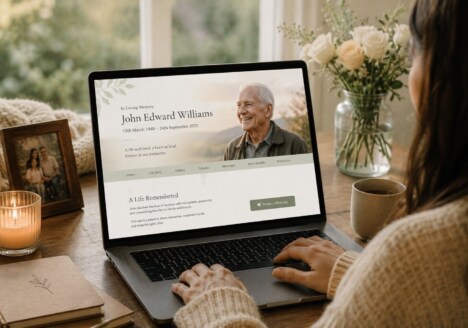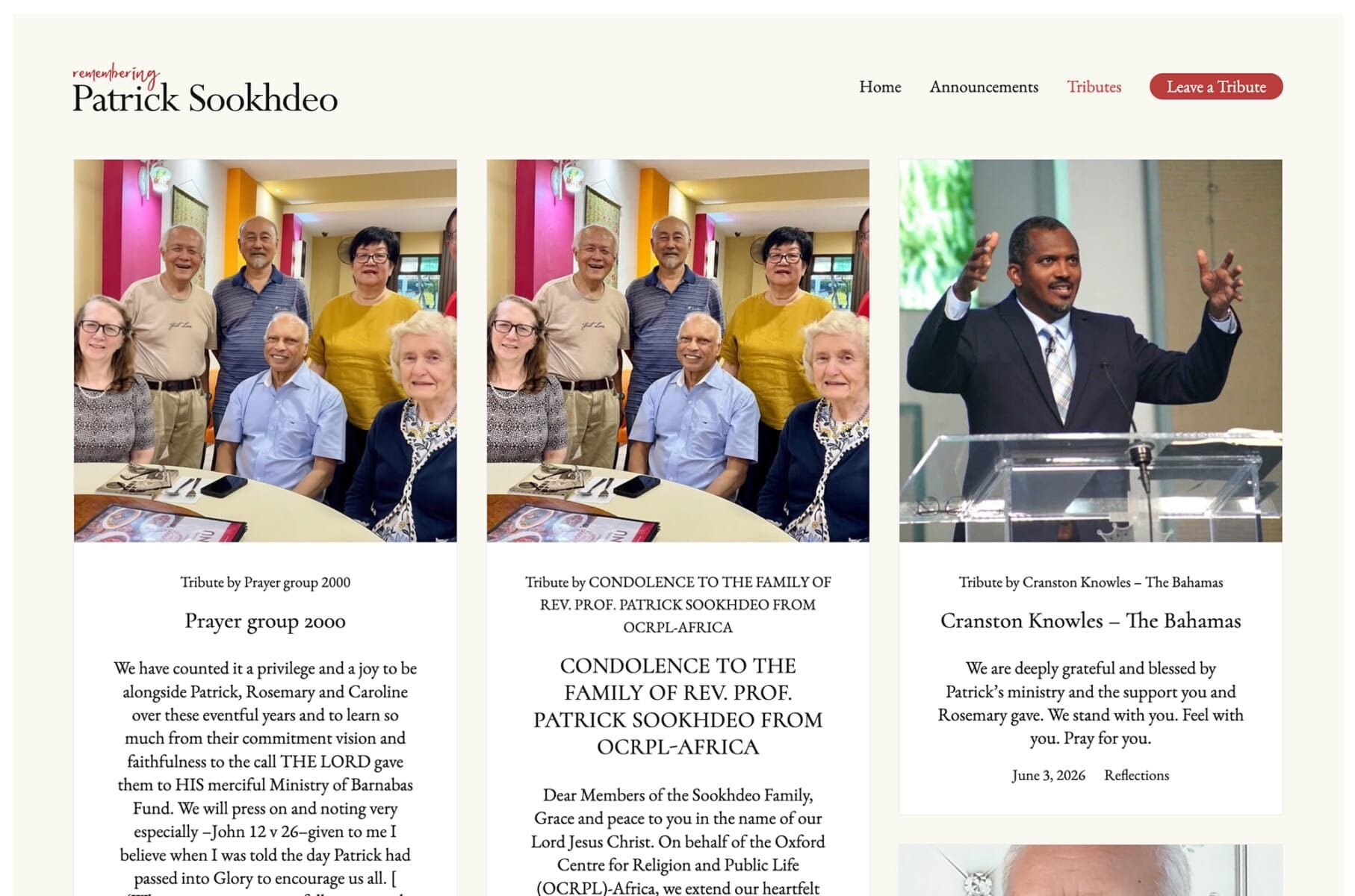
A remembrance website is more than a page with a name, a photograph and a few dates. At its best, it becomes a gentle digital home: somewhere relatives can return when they want to remember, contribute a detail or feel close to someone they miss. Good Remembrance Website Design gives those different needs room to exist together, without making the experience feel crowded or formal.
Begin with the shape of a real life
Every memorial begins with a person whose life was larger than a short biography. A thoughtful website should therefore make space for the small things that make recognition immediate: a favourite saying, an ordinary Saturday routine, a much-loved recipe, a familiar walk or the stories friends tell again and again. These details often carry as much emotional weight as major milestones because they show how a person was experienced in daily life.
The structure should help visitors move naturally through that story. A clear introduction can establish who the memorial honours, while separate sections can gather photographs, memories, achievements and messages from loved ones. This gives the site a calm rhythm. Visitors are not asked to process everything at once; they can pause, read, look back and choose the parts that feel meaningful to them.
It can also help to think beyond a single chronological biography. Some families prefer a timeline, while others respond better to themes such as family, work, humour, music, community or the places that mattered. The best memorial web design follows the character of the person and the family rather than forcing every tribute into the same template.
Make sharing feel welcoming and manageable
A remembrance website becomes richer when more than one voice can be heard. Relatives may remember different chapters, friends may hold stories the family has never heard, and younger generations may want to add their own perspective. A contribution process should make that participation feel simple, respectful and optional. Clear guidance about what to send, where it will appear and whether it can be edited removes uncertainty for people who may already be feeling vulnerable.
Not every contribution needs to be long. A short memory, a scanned note, a photograph from an ordinary day or a few lines about a favourite place can sit beside a detailed recollection. Designing for different kinds of contributions keeps the memorial open to people with different relationships to writing and different amounts of time available.
Families may also appreciate a private review step before a memory is published. This is especially useful when several people are helping to care for the website. Shared stewardship can protect the tone of the memorial while still allowing the site to grow. For more ideas about building a lasting shared space, see designing a memorial website for memories that keep opening new doors.
Design for quiet returns
Many people will visit a memorial website during anniversaries, birthdays, holidays or moments when a familiar memory suddenly surfaces. The design should support those quiet returns. Readable typography, generous spacing and restrained movement make it easier to spend time with the content. A visitor should not have to fight a busy layout, distracting pop-ups or a complicated menu in order to find a photograph or message.
Photography deserves particular care. Images can be arranged as a considered gallery rather than an endless grid, with captions that explain the setting or invite another memory. Where possible, the site should include meaningful alternative text and preserve enough context for visitors who cannot see every image clearly. Audio, video and documents can add depth too, but they should be introduced with clear labels and sensible controls so the experience remains accessible.
A calm visual language does not have to mean an impersonal one. Colours, textures and typographic choices can reflect the person being remembered: perhaps a landscape-inspired palette, a favourite colour used sparingly or a typeface that feels familiar. The aim is to create recognition without letting decoration compete with the stories.
Let the memorial grow with the family
A memorial website is often created soon after a loss, but its meaning can change over time. New relatives may discover it, children may add memories as they grow older, and an anniversary may prompt someone to find an old photograph or letter. A flexible content structure makes those additions feel like part of the original story rather than an afterthought.
It is useful to agree a simple long-term rhythm: who can add content, how often the site is reviewed and how important files are kept safely. Families might create a yearly section for messages, add a collection for a significant birthday or use a guestbook for occasional notes. These gentle rituals can help the website remain active without turning remembrance into a task.
For a broader approach to collecting the moments that define a family, explore designing a memorial website for the moments that shape a family and designing a remembrance website for the stories we carry forward.
Create a place that feels true to the person
The strongest remembrance websites do not try to make grief look polished or predictable. They offer a place where happiness, sadness, humour, gratitude and silence can sit beside one another. That balance comes from listening carefully to the family, choosing a structure that reflects the individual and leaving enough openness for future memories.
With thoughtful Remembrance Website Design, the finished site can become something families use in many different ways: a first introduction for someone who never met the person, a private point of return after a difficult day, or a growing collection of stories that helps the next generation understand where they come from. The technology matters, but its real purpose is simple: to help a life remain present in the ways that matter most.