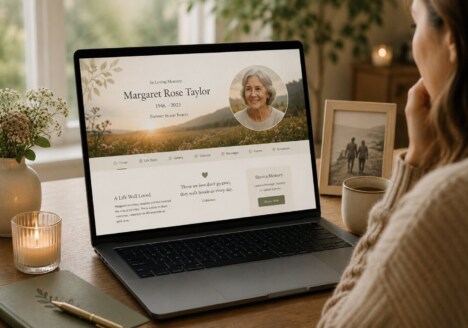
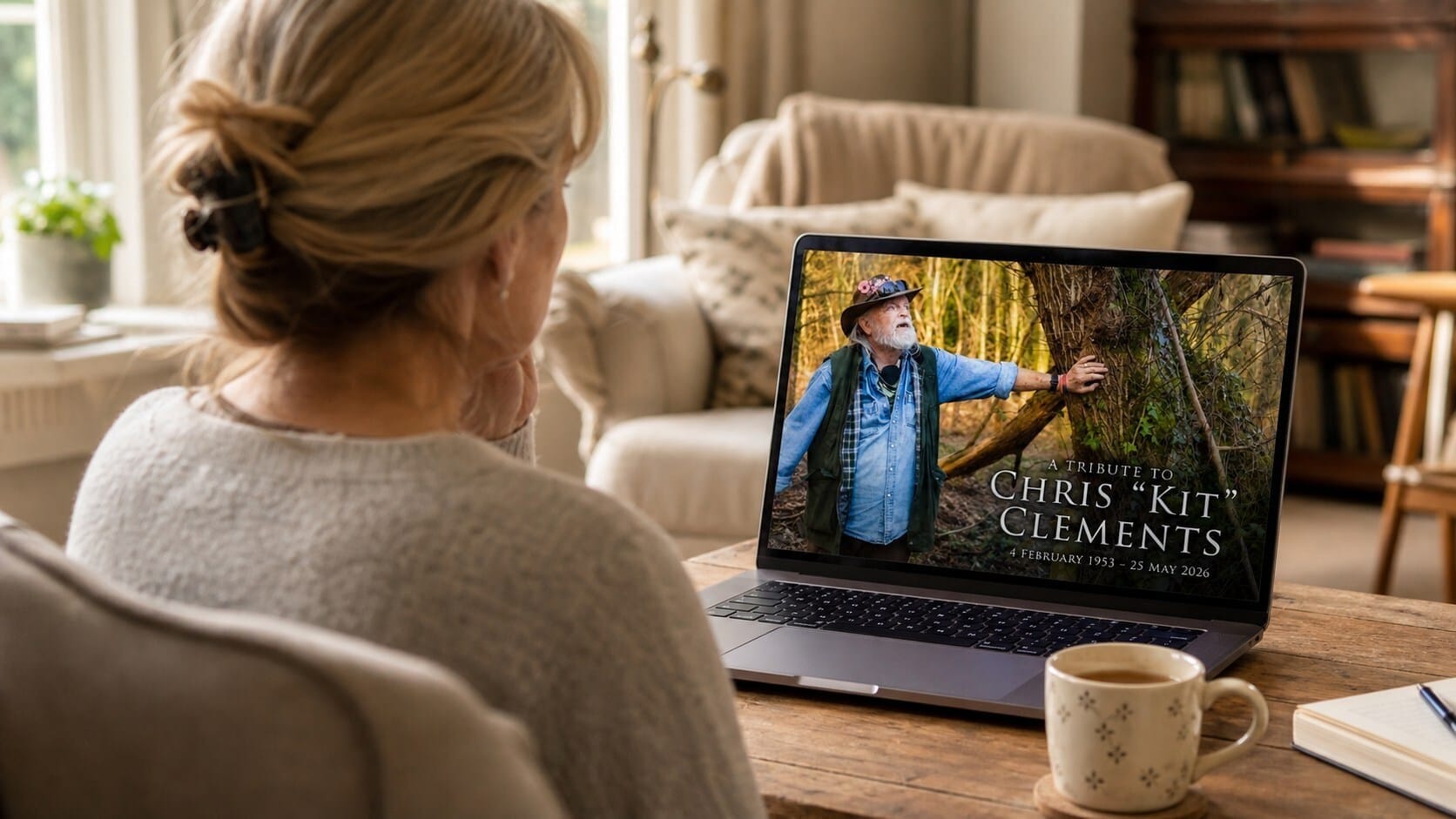
A life is remembered through more than the major milestones. It is also found in the small details: the phrase someone always used, the recipe they made without measuring, the music that filled the kitchen, or the way they welcomed people through the door. Remembrance website design can give those details a considered place, allowing a family to gather memories that might otherwise remain scattered across phones, albums and conversations.
A thoughtful memorial website is not simply an online notice or a digital photograph album. It is a living space for reflection, storytelling and connection. When the structure is calm and the experience is easy to use, relatives and friends can contribute in their own way, return when they need comfort, and discover parts of a loved one’s story they may never have heard before.
Begin with the shape of a complete life
Good memorial web design starts by making room for a whole person. A clear introduction can establish the essential facts, but the surrounding pages should move beyond a list of dates. Sections for childhood, work, family life, friendships, interests and community can help visitors understand the different roles that made someone who they were. This creates a more generous portrait and encourages contributors to share memories from different chapters.
The design should support both short recollections and longer stories. One visitor may want to leave a few heartfelt sentences, while another may have memories that deserve several paragraphs and photographs. A flexible layout keeps neither contribution from feeling out of place. For families thinking about the balance between structure and openness, memorial web design that gives shared memories a lasting shape offers a useful way to consider how the story can develop over time.
Navigation matters just as much as visual appearance. Visitors should be able to move naturally from a biography to a gallery, from a gallery to a tribute, or from an anniversary post back to the main story. Simple labels, readable text and a consistent page rhythm reduce the effort required to find something meaningful, especially for people visiting during an emotional moment.
Protect the details that make memories feel real
Personal details are often what turn remembrance into recognition. A memorial website can include favourite sayings, familiar places, handwritten notes, recipes, hobbies, achievements and the everyday routines that family members miss. These elements should not be treated as decoration added after the main content. They are evidence of character, and they give visitors prompts that make it easier to remember their own stories.
Photographs can be arranged with context rather than presented as an endless stream. A caption might explain who was present, where the picture was taken or what happened just before it. Audio and video can be valuable too, but they should be presented with clear descriptions and sensible controls so that visitors can choose how they engage. A calm visual system lets the content lead, using spacing and typography to create a sense of care without making the website feel formal or distant.
It is also worth considering how different generations will use the site. Older relatives may prefer larger text and straightforward navigation, while younger family members may contribute from a phone. Responsive memorial website design should make uploading, reading and sharing comfortable across devices. The aim is not to make every screen identical, but to make every visitor feel that the story has been prepared with them in mind.
Make contribution feel natural and respectful
A shared memorial becomes richer when people understand how they can participate. A visible invitation to add a tribute, submit a photograph or suggest a correction can turn passive visitors into contributors. The wording should be warm and specific, explaining what kind of memory is welcome and whether submissions are reviewed before appearing. This small amount of guidance helps people who want to contribute but are unsure where to begin.
Families may also want different areas for public tributes and private material. The website structure can reflect those boundaries, with carefully considered permissions and contact routes. Even when everything is public, moderation and privacy expectations should be clear. Respectful design is partly about appearance, but it is equally about giving families control over what is shared and how the story is cared for.
Rituals can provide a gentle reason to return. Birthday reflections, remembrance anniversaries, seasonal posts and newly discovered photographs keep the website connected to family life without suggesting that grief follows a fixed timetable. The ideas in Remembrance Website Design for the Stories That Need Time show why a memorial can remain open to additions long after its first publication.
Design for the moments families return to
People may visit a memorial website when they want to feel close, when they are searching for a particular fact, or when they are ready to share something remembered years later. Each reason deserves a clear path. A prominent search or archive area can help visitors find names and dates, while a carefully selected feature story can create a welcoming starting point for less purposeful visits.
Performance and accessibility are part of the emotional experience. Pages should load reliably, images should be prepared at sensible sizes, and important text should not depend on colour alone. Descriptive image text, keyboard-friendly controls and legible contrast help more people take part. These practical decisions are quiet forms of hospitality: they tell visitors that their presence matters.
Finally, a memorial website should be designed with its future in mind. Families change, new relationships form and old materials are rediscovered. A manageable content structure makes it possible to add stories without redesigning everything. Designing a Remembrance Website That Gives Meaningful Rituals a Home explores how a site can support recurring acts of remembrance while keeping the experience personal.
The strongest remembrance website design does not try to make loss disappear. It creates a dependable place where love, personality and shared history can remain visible. By protecting the small details, welcoming many voices and making return visits easy, memorial web design can help a family keep telling a true and evolving story.