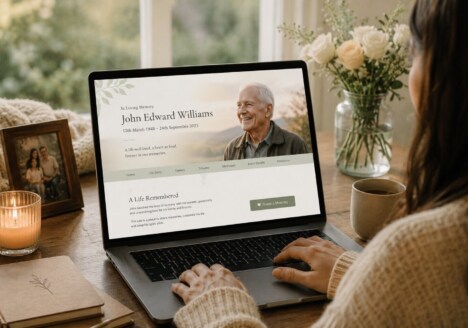

Remembrance does not follow a neat timetable. In the first days after a loss, a family may only have the energy to share a name, a photograph, or a few carefully chosen words. Months later, another memory surfaces: a favourite saying, a familiar walk, a recipe, or a story that had never been written down. Good remembrance website design makes room for that changing rhythm. It creates a calm digital place that can begin simply and become richer as people feel ready to contribute.
A memorial website should grow at a human pace
A memorial website is most useful when it does not imply that everything must be completed at once. A clear welcome, a portrait, and a short introduction can be enough to make the first version feel meaningful. The structure should then leave space for additional photographs, memories, messages, and milestones without making the original page feel unfinished. This approach respects the fact that remembrance is personal and that different members of a family will arrive with different amounts of time and confidence.
Flexible design also helps a website remain relevant beyond the funeral or first anniversary. A family might add a gallery for a birthday, a page of favourite places, or a collection of letters from people who could not attend the service. A gentle navigation system gives each contribution a natural home, while a consistent visual style makes the whole site feel like one considered tribute rather than a collection of disconnected updates. For more ideas about preserving ordinary moments, see how a remembrance website can preserve everyday memories.
Designing space for the stories people remember differently
Every person is remembered through more than one version of their life. One visitor may remember a professional achievement, another a private kindness, and someone else the humour that made a difficult day easier. Memorial web design should not force those perspectives into a single polished summary. It can offer several routes into the story: a timeline for important chapters, a gallery for visual memories, and a tribute area where people can write in their own voice.
That variety is especially valuable for families spread across different places and generations. Older relatives may prefer longer written memories, while younger visitors may respond to photographs, short captions, or a simple recording. Thoughtful typography, generous spacing, and readable contrast help all of these contributions feel equally welcome. The aim is not to make every entry look identical; it is to make every person feel that their way of remembering belongs.
Small editorial choices can protect the warmth of the experience. Headings should explain what a visitor will find, captions should add context without over-explaining, and the most personal words should remain prominent. A carefully chosen opening message can guide visitors without telling them what to feel. This is one reason a simple memorial web design approach often feels more lasting than a busy page filled with decorative effects.
Making remembrance easy to revisit
People often return to a memorial website at meaningful moments rather than on a predictable schedule. They may visit on an anniversary, when looking for a photograph, or because a conversation has brought a memory back. The design should support those quiet returns. Fast-loading pages, clear menus, and an uncluttered home page reduce the effort required to find a familiar story. A prominent route to photographs, tributes, and important dates can be more comforting than an elaborate introduction.
It is also worth considering how the site will feel on a phone. Family members may be visiting from a graveside, travelling to a gathering, or sharing a link in a private message. Responsive layouts, appropriately sized text, and buttons that are easy to tap make the tribute accessible in real circumstances. Descriptive image text and meaningful link labels help visitors using assistive technology, while plain language makes the content easier for everyone to read when emotions are high.
Revisiting should feel safe, not demanding. Optional contributions, a clear contact route, and sensible moderation arrangements can give families confidence when a website includes a guestbook or shared submissions. The best online memorials establish gentle boundaries: they invite participation while preserving the dignity and privacy of the people represented.
Letting a memorial website become part of family life
Over time, a well-planned remembrance website can become more than an archive. It can help a family explain traditions to children, collect the stories that might otherwise disappear, and create a shared reference point when relatives are unable to meet in person. The design succeeds when it supports those relationships without competing with them. Every feature should make it easier to pause, remember, contribute, or discover something meaningful.
That is the lasting value of considered remembrance website design: it accepts that a life cannot be reduced to a single page, while giving memories a dependable place to gather. With a calm structure, inclusive writing spaces, and room for new material, a memorial website can honour what has been lost and support the people who continue to carry the story forward. Families considering that wider role may also find useful guidance in how memorial web design can help share a complete life story.