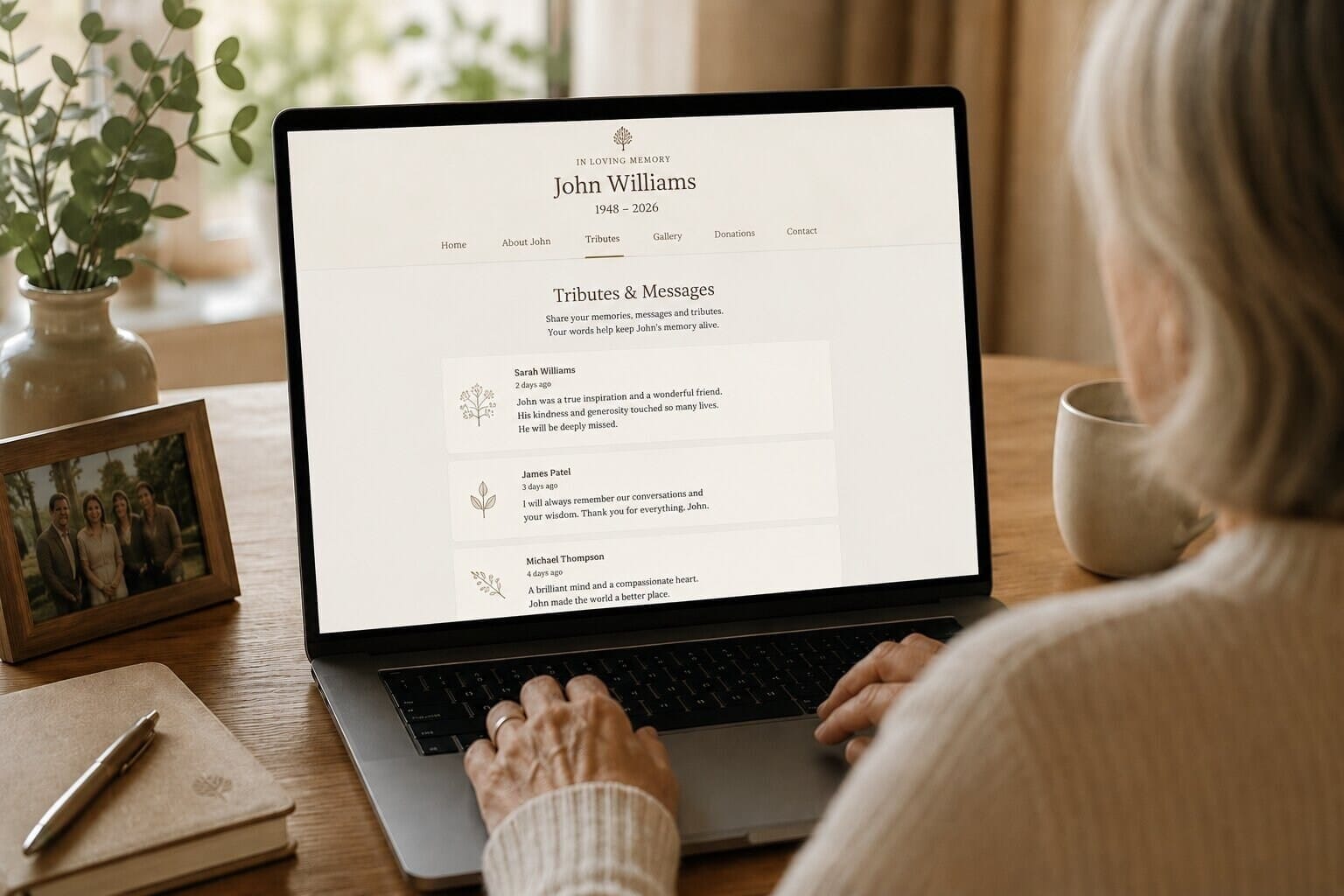
A remembrance website is often created at a difficult moment, but its value continues long after the first arrangements have been made. It gives relatives and friends a calm place to return to, whether they want to read a tribute, look at a familiar photograph, share a memory or simply spend a few quiet minutes with someone they miss. Good Remembrance Website Design recognises that people will use the site in different moods and at different stages of grief. It should feel welcoming on the day it launches, while also leaving enough room for the story to grow naturally over time.
The most effective Memorial Web Design is not built around filling every space with information. It is built around making important things easy to find and giving each contribution the attention it deserves. A clear structure, gentle visual tone and thoughtful writing can turn a collection of pages into a meaningful digital memorial. The aim is to support remembrance without making the experience feel formal, crowded or difficult to navigate.
Begin with the moments people will want to revisit
Before choosing colours, layouts or features, it helps to consider the moments a family may return to. Someone may visit to read the main tribute on an anniversary. Another person may want to find a photograph from a particular period of life. A close friend may arrive with a story to share, while a younger relative may be discovering the person through other people’s memories for the first time. These are different needs, and a well-planned website can accommodate them without creating a complicated menu.
A strong opening page usually provides a warm introduction, a meaningful photograph and a simple route into the main areas of the site. From there, memories can be organised by themes such as family, work, places, hobbies or everyday habits. This gives contributors helpful prompts while avoiding the pressure to write a perfect biography. The memories families keep finding are often small and unexpected, so the design should make those details feel just as welcome as major milestones.
Make sharing feel simple and considered
Many families want a memorial website to be a shared space, but not everyone is comfortable with the same kind of participation. Some people will write a long story; others may only have a sentence, a recipe, a voice recording or a photograph to offer. The design can acknowledge this by presenting different ways to contribute rather than treating written text as the only meaningful format.
Submission instructions should be easy to understand, with a clear explanation of what happens after someone sends a contribution. If a family prefers to review memories before they appear publicly, that process can be described in plain language. If comments are open immediately, the page should still make the purpose and tone clear. Small details such as readable forms, generous spacing and accessible contrast help people take part without feeling that they need technical knowledge.
It is also worth planning how repeated themes will be handled. Several people may remember the same garden, journey or family tradition from different perspectives. Rather than merging those accounts into one official version, the website can allow each voice to remain distinct. This is one of the strengths of a memorial website that gathers memories over time: it shows how a life has been experienced by a whole community.
Use design to create a sense of calm
Visual choices have a quiet but important role in remembrance. A restrained colour palette, comfortable type size and uncluttered page layout can help visitors focus on the content. There is no need for dramatic animation or decorative effects. Gentle transitions, carefully chosen imagery and consistent headings are usually more appropriate because they support the emotional purpose of the site rather than competing with it.
Photography should be treated as part of the story, not just as decoration. Captions can explain where an image was taken, who is pictured or why the moment mattered. A gallery can combine formal portraits with ordinary scenes: a favourite chair, a view from a walk, a birthday table or a familiar pair of hands. These details often help visitors recognise the complete person behind the dates and announcements.
Mobile presentation deserves particular attention. People may open a remembrance website on a phone while travelling, attending a gathering or sitting with another family member. Pages should load quickly, text should remain comfortable to read and images should be sized so that they do not make the experience frustrating. Thoughtful Memorial Web Design for stories families revisit treats accessibility and ease of use as part of the care shown to visitors.
Leave room for the memorial to evolve
A remembrance website should not be considered finished when it is first published. Anniversaries, new photographs, family discoveries and personal reflections may add depth over the years. A flexible structure makes these additions feel natural instead of forcing every new item into an outdated page. It can be useful to include a timeline, a journal area or a clearly labelled memory archive so that future contributions have a place to belong.
Long-term care also includes practical decisions about ownership, backups and moderation. A family should know who can manage the site, how photographs are stored and how contributions can be corrected if circumstances change. These safeguards do not make the memorial less personal; they help protect the place that has been created.
The best Remembrance Website Design gives people permission to remember in their own way. It creates a clear starting point, welcomes many forms of contribution and remains gentle enough for visitors who may be returning years later. With a thoughtful structure and a human visual approach, a memorial website can become more than an online tribute: it can become a shared place where a person’s presence continues to be felt through the memories people carry forward.