A remembrance website is not only a place to store photographs after a funeral. It can become a gentle point of return: a space where a family can add a story when it comes to mind, revisit a familiar voice, or share a small detail that deserves to be remembered. Good remembrance website design recognises that grief does not follow a neat timetable, so the experience should feel welcoming months and years after the first visit.
Begin with the way a family remembers
Every person leaves behind a different pattern of memories. One family may gather around photographs and family-history notes, while another may remember through recipes, music, sayings, work stories, or the ordinary rituals that made someone’s presence distinctive. A meaningful memorial website starts by making room for those differences rather than forcing every life into the same template.
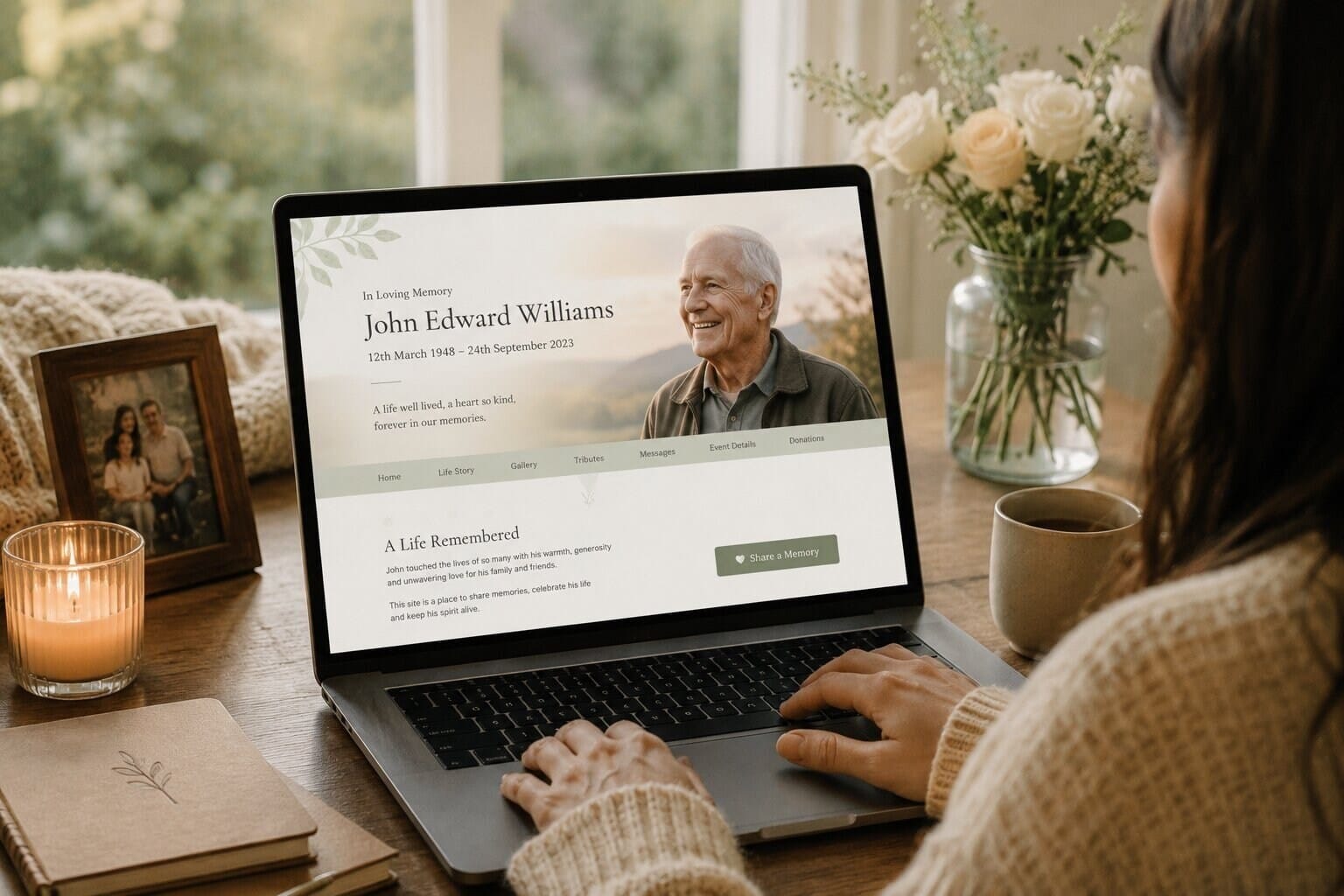
That begins with a calm structure. A clear introduction can explain who the website remembers and invite visitors to explore at their own pace. From there, sections for memories, photographs, tributes, and important dates can provide helpful landmarks without making the experience feel formal or clinical. The best layouts give visitors confidence that they can browse quietly, contribute easily, and return later without having to relearn how everything works.
It is also worth thinking about the people who will use the site. Some visitors may be close family members who know every chapter of a life; others may be old friends discovering the memorial for the first time. Short captions, descriptive headings, and a considered order of content help everyone understand the story while leaving space for personal discovery.
Give everyday details a lasting place
Large milestones matter, but a person is often remembered most vividly through the details that surrounded them. A favourite mug, a familiar walk, the way they welcomed guests, or a phrase they used repeatedly can bring a whole character to life. Memorial web design should make these details as easy to share as formal biography, because they are often the memories people return to when they want to feel close.
A useful approach is to create several gentle prompts rather than one large blank form. Visitors might be invited to share a moment they laughed together, something they learned, a place they visited, or a tradition they would like to continue. These prompts help contributors who have a memory to offer but are unsure where to begin. They also encourage a richer collection of voices over time.
For families building a fuller account of a life, a shared memorial story can grow alongside shorter recollections. Longer pages can hold context, while individual tributes preserve the immediacy of a single memory. Used together, they create a record that feels human rather than simply chronological.
Design for returning visitors
A remembrance website should be easy to revisit on an anniversary, birthday, holiday, or an unexpectedly difficult afternoon. This means the design needs to work just as well for someone arriving with a specific memory in mind as it does for someone browsing from the beginning. Prominent navigation, readable text, and visible pathways back to photographs or tributes reduce the effort required at an emotional moment.
Returning visitors also benefit from small signs of continuity. A page for anniversaries can gather dates and reflections without making the whole website feel calendar-driven. A recent memories area can show how the family’s story continues, while an archive can protect older contributions from disappearing as new ones are added. Thoughtful organisation turns the website into a living collection rather than a page that is finished once it is launched.
For practical ideas about designing for repeated visits, consider how a remembrance website can feel like a welcoming home. The aim is not to add more features for their own sake, but to make the next visit feel natural and reassuring.
Make contribution feel safe and simple
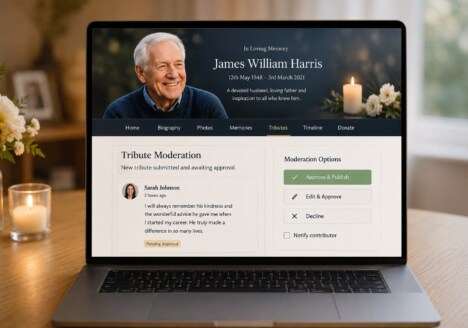
People contribute more willingly when the process is clear. A short form with plain language, sensible fields, and an opportunity to preview a message can feel much more approachable than a complicated publishing workflow. Families should be able to decide whether a contribution appears immediately, is reviewed privately, or is added by a trusted administrator. Those choices are part of the emotional care of the website.
Privacy deserves equal attention. Some memories are intended for close relatives, while others are meant for a wider community. A well-planned memorial website can explain what is public, offer appropriate permissions, and avoid collecting information that does not serve the story. Accessibility matters too: strong contrast, generous text sizing, keyboard-friendly controls, captions for video, and meaningful image descriptions help more people take part.
These choices reflect the same principle as designing for the different ways families notice and share memories. The website should adapt to people, not ask people to adapt to a rigid system.
Let the design carry the right tone
Visual restraint can be powerful in memorial web design. A carefully chosen photograph, an unhurried amount of white space, and typography that is comfortable to read often communicate more than decorative effects. Colours can draw from a meaningful place, a favourite object, or the mood of an important photograph, but they should support the content rather than compete with it.
The most successful remembrance websites feel personal without becoming difficult to use. They balance a recognisable identity with familiar navigation, allowing the individual’s character to lead while the design quietly supports every visitor. Over time, new photographs and stories can be added without making the original pages feel crowded.
Ultimately, a remembrance website is an invitation to keep noticing. It gives a family a considered place to gather the stories that arrive unexpectedly, the details that gain meaning with time, and the connections that remain. When the structure is gentle and the content can grow naturally, the website becomes more than an archive: it becomes part of how remembrance continues.