
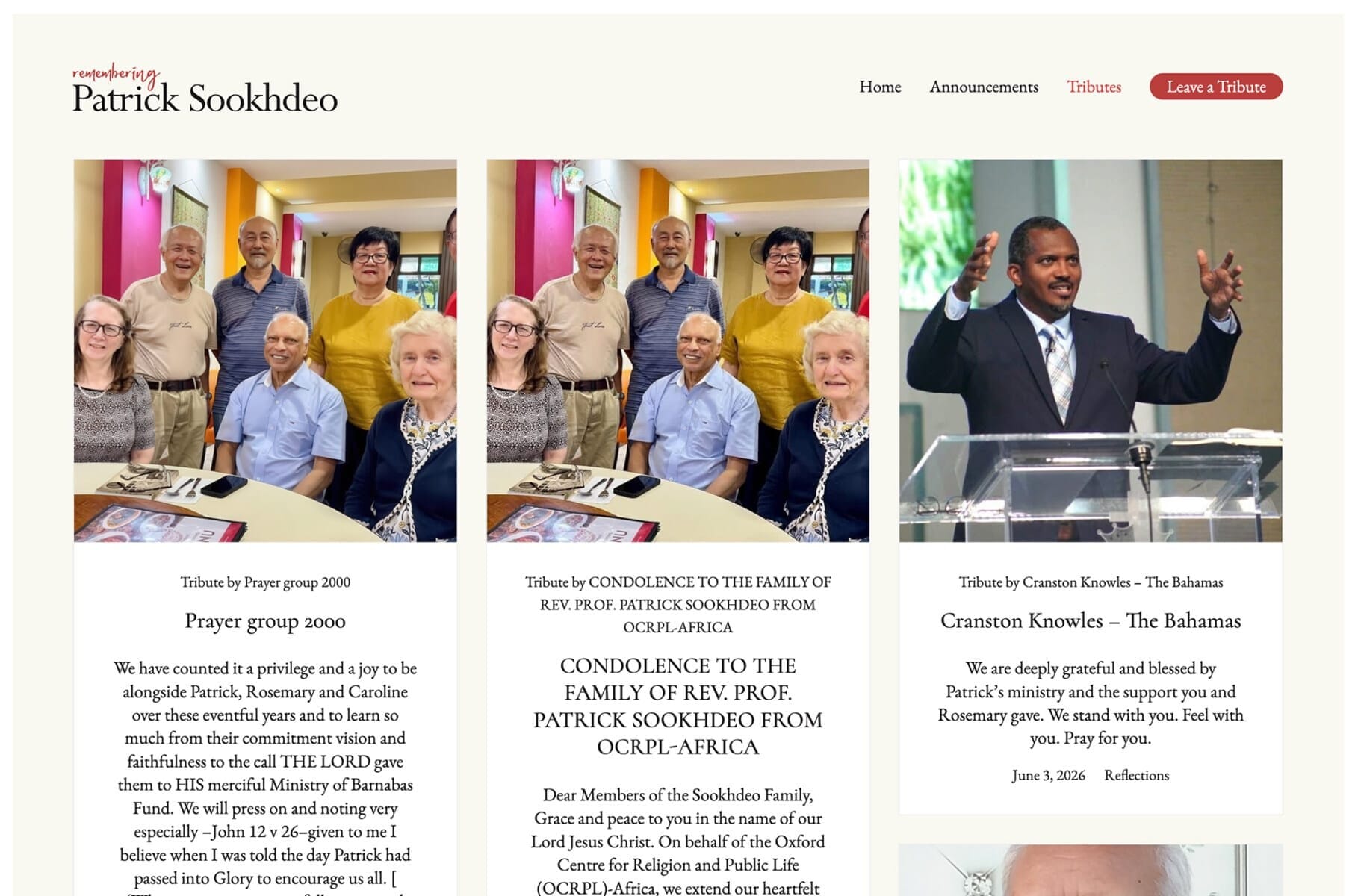
A remembrance website can become much more than a page of dates and photographs. With thoughtful memorial web design, it can offer families a calm, welcoming place to gather stories, share memories and return to the details that make one person unforgettable.
When emotions are still raw, a clear digital space can help relatives contribute at their own pace. One family member may add a favourite photograph, another may write about an everyday habit, while someone else may leave a message on an anniversary. Good design gives all of these contributions room to sit together naturally.
Start with the life behind the website
The strongest remembrance website design begins with the character of the person being remembered. Colours, imagery, typography and the order of information should feel connected to their life rather than selected from a generic template.
That might mean a gentle, understated layout for someone who valued simplicity, or a brighter collection of sections for a person whose humour and energy filled every room. The aim is not to make the website elaborate. It is to create a digital setting that feels recognisably theirs.
Families often find that memorial web design can reflect a life’s unique character through small, considered choices: a favourite landscape, a familiar phrase, or a visual rhythm that echoes the way people remember them.
Make sharing memories feel easy
A memorial website should welcome contributions from people with different levels of confidence online. Simple navigation, readable text and clearly labelled areas for photographs, stories and messages remove unnecessary barriers.
It also helps to plan for memories that arrive gradually. A family may add a story months after the funeral, discover an old album years later, or want to mark a birthday with a new reflection. A flexible structure allows the website to grow without losing its sense of calm.
For practical inspiration, building a memorial website that families can add to together means thinking about both the first visit and the many future visits that may follow.
Create a place for quiet reflection
Not every visit needs to involve adding content. Sometimes a person simply wants to look at a photograph, reread a story or spend a few quiet minutes remembering. Spacious layouts, gentle pacing and restrained use of animation can make that possible.
Privacy matters too. Families should be able to decide what is shared publicly and what remains within a trusted circle. A well-planned remembrance website can support both openness and discretion, helping visitors feel safe as they engage with personal memories.
This balance is explored in a memorial website that makes space for quiet reflection, where the design supports remembrance without competing for attention.
Let the story continue to grow
The most meaningful memorial websites are not finished on launch day. They become living collections of a person’s story, shaped by the people who knew them and enriched by memories that might otherwise be forgotten.
With a clear structure and a warm, personal visual language, remembrance website design can connect generations. It gives younger relatives a way to discover family history, while giving those who knew the person best a lasting place to celebrate their life.
A thoughtful memorial web design project therefore does more than present information. It creates a digital home for remembrance: somewhere every memory can find its place, and where a family can keep returning to the life they share.