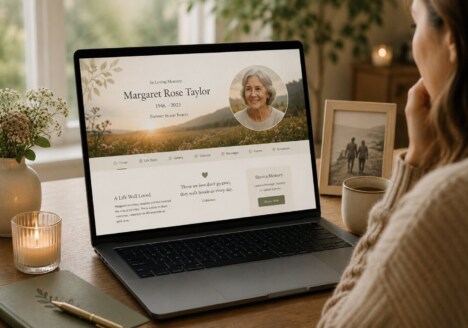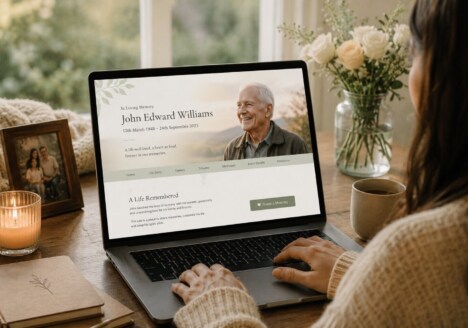

A remembrance website can become much more than an online collection of photographs. With thoughtful Remembrance Website Design, it can give a family a calm, welcoming place to return to the traditions, stories and small details that made someone’s life distinctive. The best memorial websites do not try to make grief feel tidy. Instead, they offer a flexible space where memories can be gathered gradually, revisited often and shared by people who may be separated by distance.
Begin with the traditions that make a life recognisable
Every family has its own language of remembrance. It might be a birthday breakfast, a favourite walk, a particular song played at gatherings, or the way someone always welcomed guests into their home. These details can be easy to overlook when a website is planned around dates and formal milestones alone. A strong memorial web design process starts by asking what people will want to remember on an ordinary day, not only what belongs in an obituary.
That approach helps shape the structure of the website. A page about annual celebrations might sit alongside a gallery of familiar places, a collection of sayings, or a timeline that includes everyday moments as well as major achievements. When these elements are easy to find, visitors can move through the story in a natural way. The website feels personal because it reflects the rhythm of a real life rather than presenting a simple list of facts.
It is also worth leaving room for different kinds of contribution. One person may remember a career achievement, while another recalls a quiet kindness that nobody else saw. A useful remembrance website gives every voice a place, with clear invitations for family and friends to share a photograph, memory or short message when they are ready.
Create a gentle path through photographs and memories
Photographs often form the emotional centre of a memorial website, but a large unstructured gallery can become difficult to use. Grouping images by chapters of life, locations, relationships or recurring occasions gives visitors a gentle path through the material. Captions can add valuable context: who is pictured, where the photograph was taken, what was happening just before the moment, or why the image still makes people smile.
Good Remembrance Website Design should make this browsing experience feel unhurried. Generous spacing, readable type and restrained colour choices allow the photographs to carry their own meaning. Navigation should remain clear on a phone as well as a larger screen, because many visitors will arrive through a message shared with them. A simple menu and descriptive page titles are often more comforting than elaborate effects or animations.
Families may also appreciate a balance between public and private areas. Some memories are suitable for anyone who knew the person, while others may be intended only for close relatives. Explaining how photographs and contributions are handled can help people feel confident before they submit anything. The aim is to create an online setting that feels safe, considered and respectful from the first visit.
Design for return visits, not just the first tribute
A memorial website often matters most after the first weeks of loss, when the stream of practical arrangements has slowed and people begin to notice the absence in everyday routines. Designing for return visits means including content that can grow over time. A family might add memories on anniversaries, record a new story from an older relative, or use the website as a place to gather before visiting a meaningful location.
This is where a clear editorial structure becomes especially helpful. A page for new memories, a well-organised archive and an obvious way to find older contributions can prevent the website from becoming a static launch project. The family does not need to complete everything at once. A carefully planned memorial website can grow with a family’s memories, allowing new material to sit naturally alongside the original tribute.
Return visits can also be supported by thoughtful prompts. Questions such as “What did they teach you?”, “Which place reminds you of them?” or “What tradition should continue?” can help visitors contribute something more personal than a generic condolence. These prompts should be optional and gentle. A remembrance website should never make people feel that they are expected to perform their grief or produce the perfect story.
Make the experience welcoming for every generation
Family memories are often spread across generations, and each group may use a website differently. Older relatives may value large text, straightforward navigation and the ability to read a complete story without distractions. Younger family members may contribute through their phones, share links with friends or add short videos and recordings. An inclusive Memorial Web Design approach makes these different habits part of the brief from the beginning.
Accessibility is therefore part of emotional care, not a technical afterthought. Strong contrast, descriptive link wording, meaningful image text and a layout that works without precise tapping all help more people take part. Audio memories can be accompanied by a written summary, while videos benefit from captions. These small decisions ensure that a treasured story is not locked away from someone because the format is difficult to use.
The visual character of the site should also reflect the person being remembered without becoming overly formal. A favourite colour, landscape, material or type style can provide a quiet thread through the design. The result should feel distinctive, but still leave enough calm space for visitors to focus on the words and images. As explored in memorial web design that keeps a family telling the story, continuity matters because remembrance is an ongoing relationship rather than a single event.
Let the website hold what families cannot hold alone
A carefully designed remembrance website gives a family somewhere to place the details that might otherwise become scattered across phones, social media posts and private conversations. It can bring together the formal story and the informal one: the achievements people celebrate, the habits they miss, the photographs that need explaining and the memories that appear unexpectedly years later.
The most successful sites are not defined by how much content they contain on launch day. They are defined by how naturally people can use them, contribute to them and return to them. By making space for traditions, different voices and future memories, Remembrance Website Design can create a lasting digital place that feels genuinely connected to the person it honours.