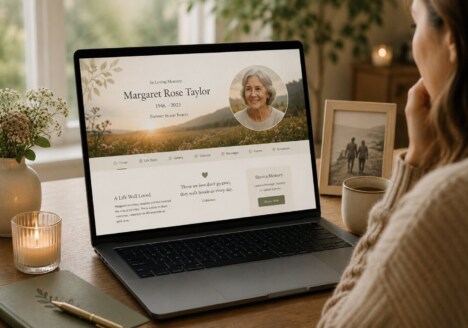

A meaningful memorial website remembers who someone was while also showing what continues because they lived. Their values, relationships, influence and family stories form a legacy that reaches beyond a biography. Thoughtful Remembrance Website Design can hold both parts together, creating a tribute that feels personal in the present and valuable for the future.
Tell the story of the whole person
A life story is strongest when it balances significant milestones with personal detail. Education, work and achievements provide context, while favourite places, everyday habits, humour and relationships reveal character. Together they help visitors recognise the person rather than simply learn facts about them.
Gathering memories from several people can uncover details one account might miss. Family, friends and colleagues may each describe a different side of the same life. Sensitive memorial web design for tributes brings these perspectives into a clear structure without flattening their individual voices.
Show how values became actions
Legacy is often expressed through what a person gave to others. They may have offered encouragement, supported a community, passed on practical skills or created family traditions. Stories that show these values in action can make the memorial especially vivid and meaningful.
Short anecdotes work well because they connect an abstract quality to a real moment. A story about kindness, determination or generosity allows visitors to understand not only what mattered to the person, but how those values affected the people around them.
Preserve material for future generations
Photographs, letters, recordings and documents can become fragile or scattered over time. A memorial website provides one organised place where carefully selected material can remain connected to the stories that explain its importance. Captions should identify people, locations and dates whenever possible.
This creates a resource for younger relatives who may not have known the person directly. Our guide to preserving family history through memorial websites explains how personal archives can become accessible records that help families understand where they came from.
Welcome the memories of others
A legacy becomes clearer when people describe how a life touched their own. Friends might recall support received at a difficult time, colleagues may remember guidance, and relatives may share traditions that continue today. Inviting these contributions broadens the memorial beyond one viewpoint.
A website where people can leave tributes allows new stories to arrive gradually. Families can use simple prompts and review messages before publication, ensuring the space remains respectful while still welcoming genuine voices from different parts of the person’s life.
Design a tribute that can continue growing
Good Memorial Web Design should make future additions straightforward. Clear sections, consistent image treatment and simple navigation allow new photographs or reflections to fit naturally. One or two trusted relatives can provide light stewardship by checking details and organising contributions.
The website should also be comfortable to use across phones, tablets and computers. Readable text, strong contrast and logical headings help visitors of different ages explore the memorial. Accessibility is essential when the aim is to carry a story across generations.
Remembrance Website Design can honour both life and legacy by connecting personal memories with the influence that remains. When stories, values, photographs and shared tributes are arranged with care, the memorial becomes more than a record of the past. It becomes a lasting place where future visitors can understand, remember and carry something meaningful forward.