A remembrance website is often created at a difficult moment, but its value continues long after the first pages are written. It can become the place where a family gathers photographs, stories, music and small details that might otherwise be scattered across phones, albums and conversations. Thoughtful Remembrance Website Design makes that gathering feel calm and natural, giving people room to remember in their own way.
The strongest memorial websites do not try to tell one definitive version of a life. They leave space for different voices and different kinds of memory. A short story from a colleague, a recipe remembered by a grandchild and a photograph from a favourite walk can sit alongside one another without needing to compete. This is where considered Memorial Web Design becomes more than a visual exercise: it creates an atmosphere in which every contribution feels welcome.
Designing a gentle place to return to
People may visit a memorial website on the anniversary of a death, after finding an old photograph, or simply because they want to feel close to someone they miss. The experience should therefore be easy to understand and unhurried. Clear navigation, readable type and generous spacing help visitors focus on the memories rather than working out how the website functions.
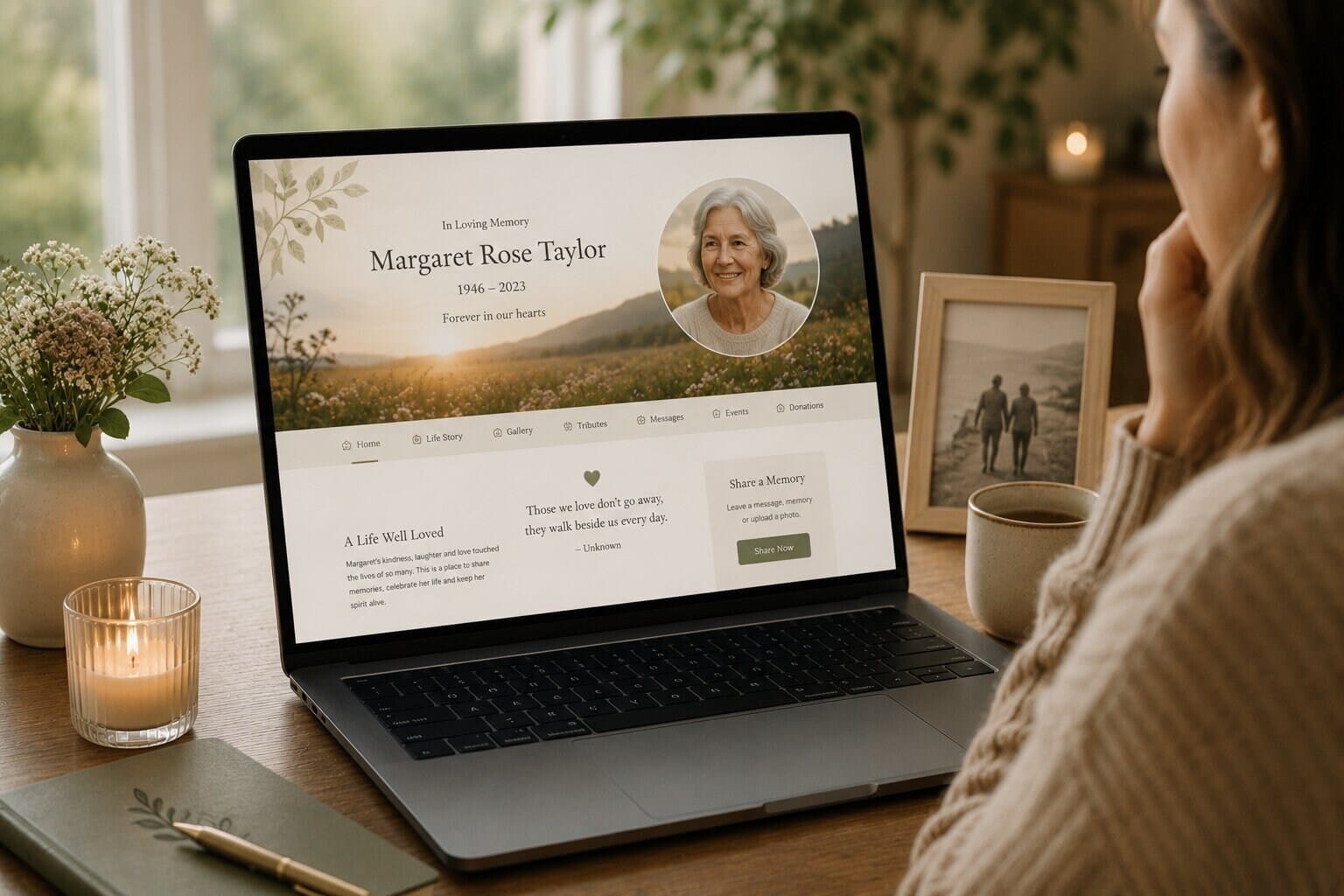
A welcoming home page can introduce the person with a meaningful photograph, a brief sentence and a simple invitation to explore. From there, the structure might lead to a life story, a gallery, a collection of tributes or a page for family updates. The design should guide visitors gently, without filling every part of the screen with instructions or decoration. A restrained palette and carefully chosen details can communicate warmth while allowing the content to remain central.
It is also useful to think about the return visit. A memorial website should feel familiar each time someone opens it, even as new contributions are added. Consistent headings, predictable links and a stable layout make the site feel like a dependable room in a home. Families considering the wider role of a memorial website around the ways families remember may find that this sense of continuity matters as much as the initial launch.
Making room for everyday stories
Major milestones are important, but everyday memories often create the strongest sense of connection. A favourite phrase, the way someone made tea, a familiar laugh or a place visited every summer can say something deeply personal. Remembrance Website Design should make these smaller details easy to share, rather than suggesting that every contribution needs to be polished or formal.
One effective approach is to organise content by themes as well as by dates. Sections such as family life, work, friendships, places, interests and traditions can help visitors find an entry point. A timeline can provide useful context, but it should not be the only way to explore a life. The ability to move between photographs, written memories and related stories reflects the way people actually remember: through association, feeling and recurring detail.
Good content design also considers the person contributing. Some visitors may write several paragraphs, while others may only have a sentence or an image to offer. A memorial site can honour both. A short tribute does not need to be made to look insignificant, and a longer story should be comfortable to read on a phone. This balance is part of creating a remembrance website that makes room for returning memories, including memories that emerge gradually over time.
Supporting many voices with thoughtful structure
Families rarely share memories in exactly the same way. Some people prefer photographs, some tell stories, and others express themselves through poems, songs or links to meaningful places. A flexible memorial website can support this variety without becoming confusing. Clear labels, descriptive captions and a sensible order help visitors understand how each piece belongs to the wider story.
Accessibility should be part of that care from the beginning. Strong contrast, comfortable text sizes, descriptive image captions and keyboard-friendly controls make the website easier for older relatives and visitors with different needs. Mobile-friendly layouts are equally important because many people will arrive through a shared link on a phone. These decisions are quiet, but they ensure that participation remains open to more of the people who matter.
Privacy and moderation deserve thoughtful attention too. Families may want a public tribute, a private space for invited relatives, or a mixture of both. Clear guidance about what can be shared, along with a way to correct or remove content when necessary, helps the website remain respectful. The goal is not to control every memory, but to give contributors confidence that their words and photographs are being handled carefully.
Creating a memorial web design with lasting meaning
A successful memorial website does not need to feel elaborate. It needs to feel true to the person and comfortable for the people who return to it. The most meaningful choices are often the simplest: a photograph with emotional importance, a page title that sounds like the family, and a structure that lets visitors move through memories at their own pace.
Over time, the website can become part of the family’s rituals. It may be visited before a gathering, shared with someone who never had the chance to meet the person, or revisited when a new generation asks questions. By giving everyday memories a clear and dignified home, Memorial Web Design helps a life remain present in an honest, evolving way.
For more ideas about shaping a site around personal history, explore designing a remembrance website for the stories we carry forward. The right design will always be personal, but it can also be practical, accessible and ready to hold new memories whenever families are ready to share them.