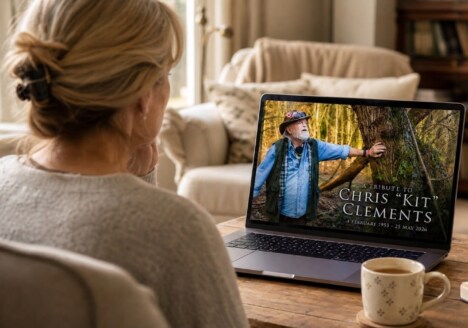
A remembrance website should feel like a place people can return to, not simply a page that records a date and a name. When families begin thinking about Remembrance Website Design, they are often looking for a thoughtful way to gather photographs, stories, messages and everyday details that might otherwise remain scattered across phones, albums and conversations. Good design gives those memories room to breathe while making it easy for different generations to take part.
Begin with the person, not the template
The strongest memorial websites start by asking what made a person recognisable to the people who loved them. That might be a favourite place, a particular phrase, a lifelong interest, a talent for bringing people together or the small routines that shaped family life. A generic layout can make every tribute feel interchangeable, while a considered visual direction can reflect the character of the individual without becoming overly decorative.
This is where a calm, flexible structure matters. The opening section might introduce a name and a short welcome, followed by clear routes to a life story, photo collection, memories from friends and family, and details of a meaningful anniversary or gathering. The design should guide visitors gently, allowing someone who is visiting for the first time to understand the story while giving close relatives space to add depth over time.
Make room for many kinds of memory
Not every memory arrives as a polished biography. Some are long stories; others are a sentence, a recipe, a scanned letter or a photograph whose meaning is known only to one branch of the family. A thoughtful memorial website treats these different contributions as equally valuable. Clear content areas, readable typography and an uncluttered photo gallery help visitors move between major milestones and the quiet details that make a life feel real.
It can also help to design for the ways people naturally revisit a tribute. Someone may arrive wanting to share a story, while another visitor may be looking for a particular photograph or returning on a birthday. Designing a Remembrance Website That Lets Every Voice Belong means offering simple prompts and intuitive navigation, so the site can grow without demanding that every contributor understand technology or write in the same style.
Create a gentle rhythm for returning visitors
Memorial websites often become part of family rituals. A page may be visited on an anniversary, before a gathering, during a moment of reflection or when a younger relative wants to learn more about someone they never met. The experience should therefore feel welcoming on a phone as well as a larger screen, with generous spacing, strong contrast and links that are easy to use without effort.
Small design decisions can support that sense of continuity. A prominent but understated navigation menu, a consistent way to display captions and a clear distinction between the life story and newer contributions all reduce friction. Families may also appreciate a visible invitation to add a memory, because it turns the website from a finished monument into a living collection of shared knowledge. The aim is not to fill every space, but to make the next visit feel natural.
Let the story grow with the family
A memorial website should be able to hold change. New photographs may surface in an attic, an old colleague may send a story years later, or a family may decide to add a page about a place that mattered. Planning for this from the beginning makes the site easier to maintain and prevents important memories from being hidden in an overloaded single page. It also gives relatives permission to contribute in stages, when they feel ready.
That long-term approach connects with the idea behind carrying family stories forward: the website becomes a bridge between what is remembered now and what future visitors may discover later. It can also complement practical ideas such as preserving the details families never want to lose, from familiar sayings to ordinary moments that might not appear in a formal biography.
Choose warmth, clarity and intention
The most meaningful Memorial Web Design is rarely the most complicated. It is warm without being sentimental, personal without being difficult to navigate and distinctive without competing with the memories themselves. A considered colour palette, carefully chosen imagery and patient typography can create a quiet setting in which stories remain the focus.
When every element has a purpose, the finished website can serve many people at once: the relative adding a new photograph, the friend leaving a message, the child learning a family story and the visitor who simply needs a peaceful place to remember. A well-made remembrance website does not try to close the story. It gives the people who remain a thoughtful, accessible place to keep telling it.
For families considering the next step, exploring how a memorial website supports the people who keep memories alive can be a useful way to think about content, contribution and care before the design begins.