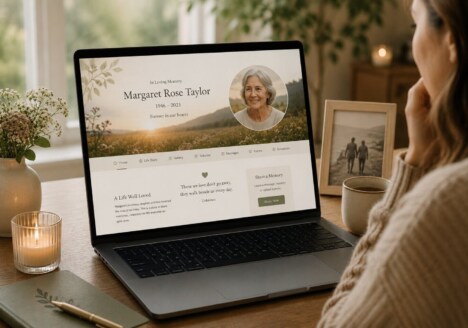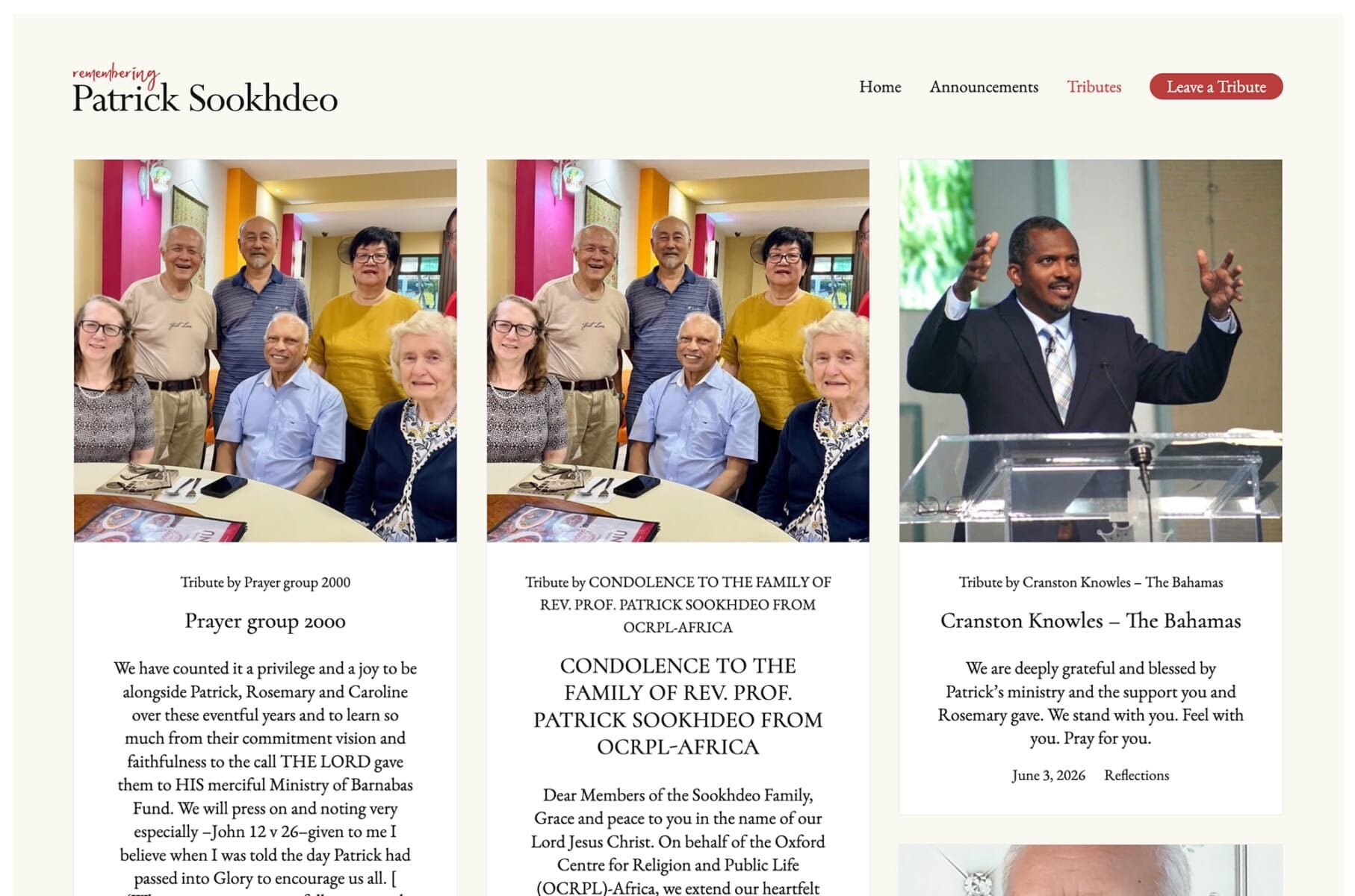
A memorial website can become much more than a page that records a name and a date. With thoughtful Remembrance Website Design, it can hold the small connections that continue after a death: the places someone loved, the phrases a family still repeats, the photographs that bring a room back to life, and the memories shared by people who may never meet in person. The most meaningful memorial sites are shaped around real relationships, not just a formal biography.
That is why Memorial Web Design needs a careful balance of clarity and warmth. Visitors may arrive while grieving, preparing for an anniversary, or simply wanting to feel close to someone they miss. A well-planned site gives people somewhere to pause, contribute, and return to without clutter or an experience that feels commercial.
Designing around the connections people remember
A life is rarely remembered in a single straight line. One person may remember a lifelong friendship, another a shared workplace, and another the quiet routines of home. A memorial website can acknowledge those perspectives by giving the story room to breathe. Instead of one long block of text, it might use sections for family memories, personal reflections, photographs, music, favourite places, and the ordinary details that made the person distinctive.
This approach helps families create a fuller picture over time. A relative who was not ready to write immediately may later add a story about a holiday, a meal, or a conversation that now feels precious. The design should make that contribution feel welcome rather than demanding. Clear prompts, readable forms, and a calm visual rhythm can encourage participation without turning remembrance into a task.
Families considering the tone of their site may find stories behind everyday moments a useful starting point. Small details often give visitors the strongest sense of a person’s character, especially beside larger milestones.
Making room for many ways to participate
Not everyone expresses grief in the same way. Some visitors may write several paragraphs; others may prefer to leave a sentence, upload one photograph, or light a virtual candle. Good Remembrance Website Design does not rank these contributions. It creates several gentle ways to take part, so the site reflects a whole community rather than only confident writers.
Accessibility matters as much as visual style. Comfortable type sizes, strong colour contrast, descriptive image text, obvious buttons, and layouts that work on a phone help visitors engage at their own pace. Someone may visit late at night on a small screen or use assistive technology. A considerate memorial site treats those needs as part of the emotional experience.
Moderation can be designed with the same care. Families may want contributions immediately, while others may prefer to review them first. Clear guidance protects the tone of the space and reassures visitors that their words will be handled respectfully.
Creating a space that can grow with a family
A memorial website should change without losing its identity. Anniversaries, birthdays, new photographs, recorded stories, and messages from people who discover the site later can all become part of its continuing history. Simple navigation makes additions easy to find, while dates or gentle labels show how the collection has developed.
A timeline can show important chapters, but it should not suggest that a person’s value is limited to major events. A gallery can preserve images, but captions and accompanying memories give them context. A section for family traditions can show how someone’s influence continues. Each feature should support the story rather than compete with it.
Ideas such as giving shared memories a lasting shape can help families decide what belongs now and what might be added later. Building with future contributions in mind prevents the first version from feeling finished before everyone has taken part.
Keeping the experience calm, personal and enduring
The strongest Memorial Web Design often feels quietly confident. It uses colour, spacing, imagery, and typography to create an atmosphere that suits the person being remembered, while avoiding decoration that distracts from the stories. A favourite landscape, familiar colour, or carefully chosen photograph may be enough to give the site a personal character.
It is worth considering how visitors will return. A clear link can be shared privately, included in an anniversary message, or found through a family archive. The homepage should explain whose memory is being honoured and where visitors can begin. Thoughtful pathways can then lead to the biography, gallery, messages, and contribution options without forcing every visitor through one route.
For a related perspective, creating a place for memories to rest is less about a static online monument and more about offering dependable space for reflection. When the structure is welcoming and content can grow, a memorial website remains meaningful across changing seasons of grief.
Ultimately, Remembrance Website Design is an act of listening. It listens for the stories people tell, the details they protect, and the connections they want future generations to understand. A carefully made memorial site gives those memories a dignified home while leaving room for new voices. That combination of structure, sensitivity, and flexibility allows a digital tribute to feel genuinely human.