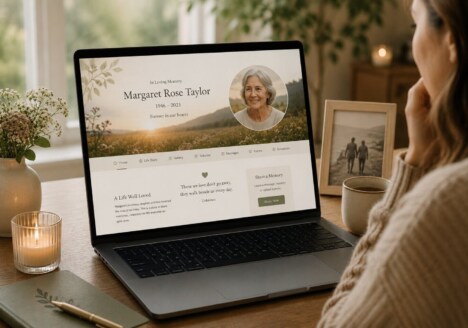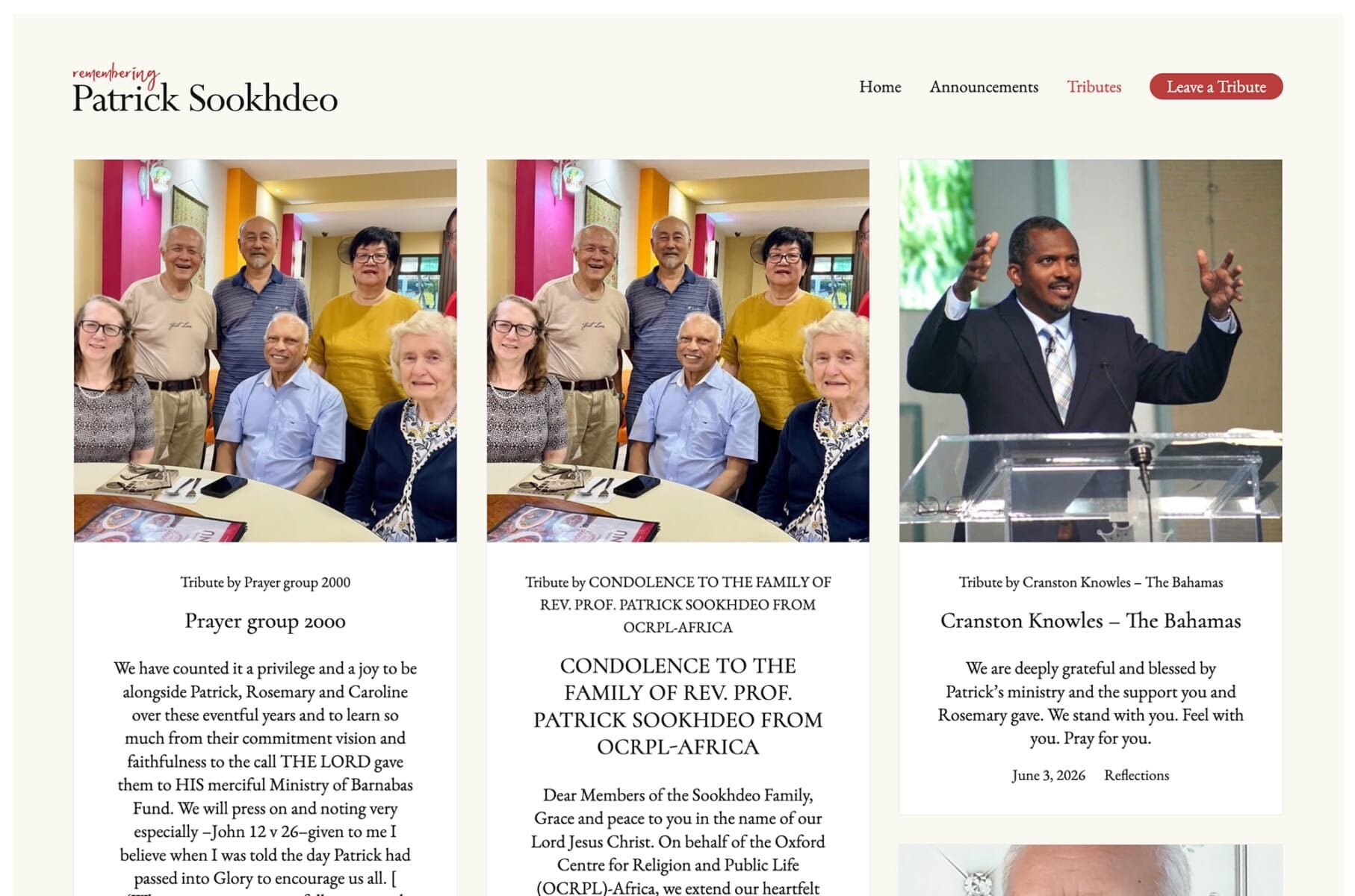
A memorial website is more than a digital noticeboard. When it is thoughtfully planned, it becomes a calm place where relatives and friends can return to the details that made someone unforgettable. Good remembrance website design gives a family room to gather photographs, stories, music, memories and practical information without making the experience feel crowded or impersonal.
The most useful memorial websites are shaped around the way people actually remember. Some visitors may want to read a long story from beginning to end, while others may arrive looking for one photograph, a date, a familiar recipe or a place to leave a message. Memorial web design should make all of those journeys feel natural. Clear navigation, generous spacing and a welcoming tone help visitors spend their attention on the person being remembered.
Begin with the moments people return to
A life story is not only a timeline of major events. Families often hold most tightly to small, vivid moments: the expression someone used every week, the holiday tradition they started, the garden they tended or the songs they always played in the car. A strong memorial website design allows these details to sit alongside birthdays, careers, marriages and achievements, so the person is represented as a whole human being rather than a list of milestones.
One useful approach is to organise content into gentle themes. A “Life and memories” section might hold a biography and written tributes, while “Family stories” can gather anecdotes from different generations. A photo gallery can be divided by place, decade or occasion if that makes it easier to explore. These choices should remain flexible: families may discover new photographs and stories months or years after the first launch, so the structure needs to welcome additions rather than imply that the story is finished.
Make sharing comfortable for every contributor
People contribute to remembrance in different ways. One person may write several pages, another may upload a single photograph, and someone else may prefer to leave a short sentence on an anniversary. The design should make every contribution feel worthwhile. A simple tribute form, clear prompts and an obvious explanation of how submissions are reviewed can remove uncertainty for visitors who are unsure what to say.
It is also important to give family members control over tone and privacy. Some memories belong in a public space, while others may be better suited to a private family area or a carefully moderated guestbook. Thoughtful Memorial Web Design can communicate these boundaries without making the site feel restrictive. Warm language, accessible typography and mobile-friendly forms all help people participate when they are visiting from different places and using different devices.
For families collecting material over time, a dedicated remembrance website offers a dependable home for memories that might otherwise be scattered across social media accounts, email threads and personal photo libraries. A consistent structure makes it easier to add a new message or image while preserving the calm atmosphere visitors already know.
Use visual choices to reflect a real personality
Memorial design does not have to rely on a standard solemn template. Colour, type, imagery and layout can all reflect the character of the person being remembered. A love of the coast might inspire an airy palette and generous horizon imagery. A passion for gardening could be echoed through botanical details and natural textures. Someone known for bright humour may be honoured by a lighter visual rhythm and stories that allow warmth as well as sadness.
Personalisation works best when it remains restrained. One meaningful portrait, a consistent set of colours and a few carefully chosen visual details can create more emotional clarity than a page filled with decorative elements. Photographs should be displayed at a useful size, with captions where context matters. Alt text and readable contrast ensure that the memorial remains welcoming to visitors with different access needs.
There is value in designing for the moments when words are difficult. A quiet opening section, a prominent photograph or a simple “leave a memory” invitation can guide someone gently without telling them how to grieve. The page should feel considered, but never over-produced.
Build a memorial space that can keep growing
The first version of a memorial website is only the beginning. Anniversaries, family gatherings and newly discovered documents often bring fresh material to the surface. A durable site makes updates straightforward, with categories or collections that can expand without becoming confusing. It can also include practical reminders about candle-lighting events, charity donations, remembrance gatherings or places connected with the person’s life.
Regular care matters as much as the initial design. Families may want to review older links, add captions, refresh the welcome message or invite a new generation to contribute. Simple memorial web design supports that ongoing care because the important actions remain easy to find and the content remains the focus.
A well-made remembrance website gives people permission to arrive in their own way. It can hold grief, gratitude, humour, history and everyday affection side by side. By designing around real moments, welcoming different kinds of contributions and leaving room for the story to grow, a memorial website becomes a lasting family resource: a place to remember, revisit and share what made one life matter.