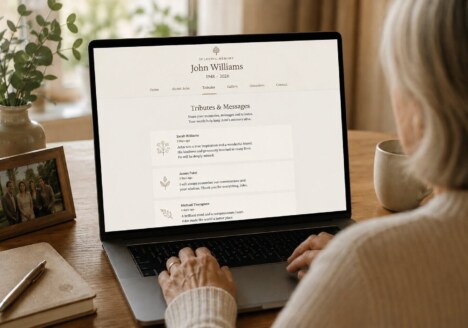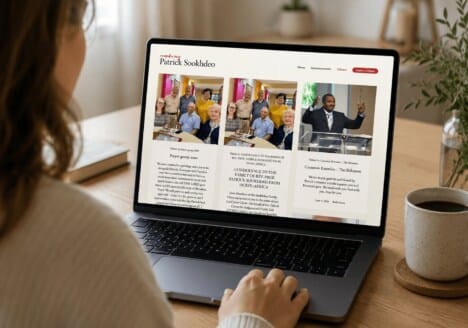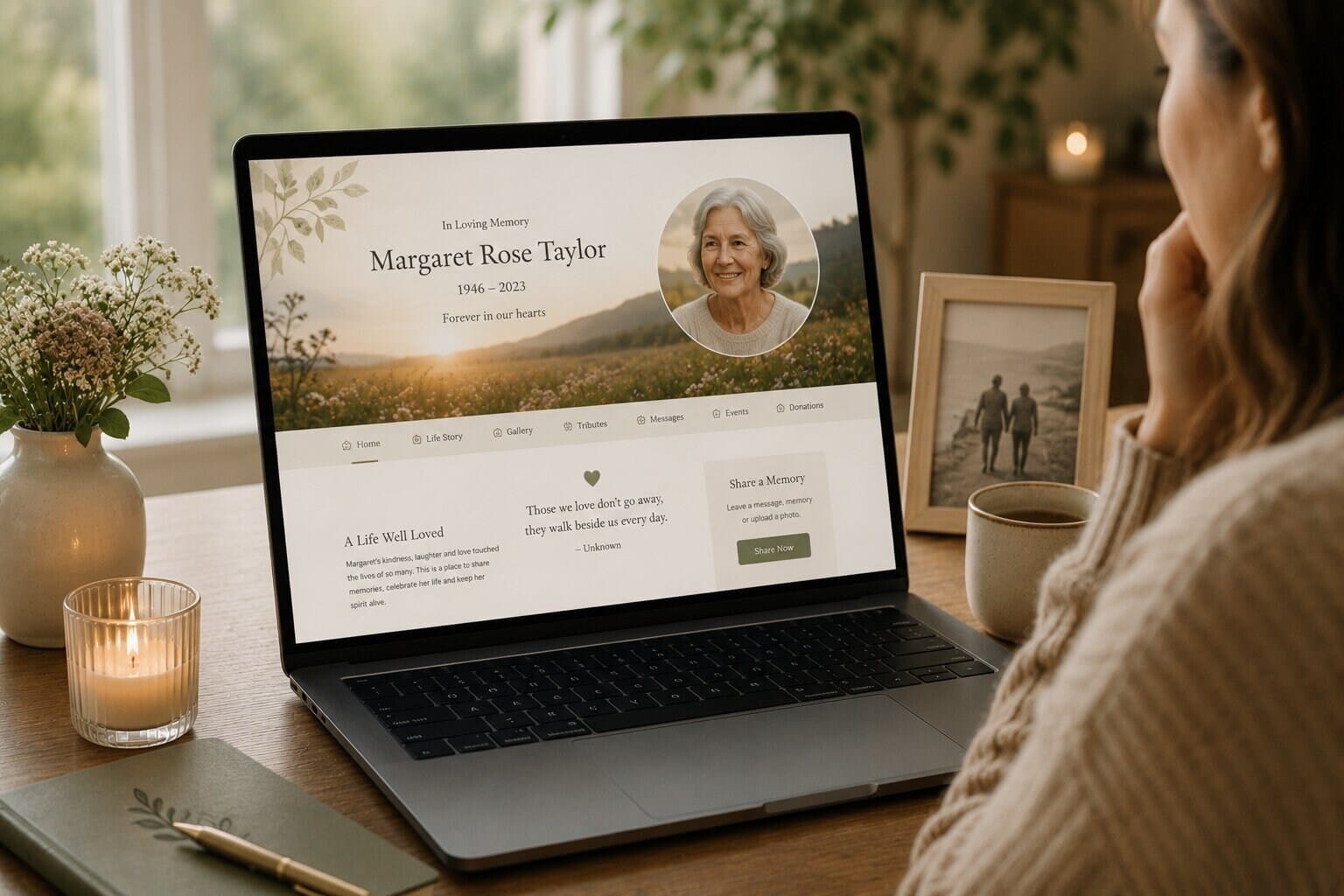
A memorial is never a finished story. In the first days after a loss, a family may need a calm place for practical information, photographs and messages of support. Months or years later, that same place can become something quieter: a collection of ordinary moments, family traditions and small details that are easier to remember when they have been gathered together. Thoughtful remembrance website design recognises that memories change as people return to them.
A well-made memorial website does not try to make grief feel tidy. Instead, it gives different people room to remember in different ways. Some visitors may want to read a detailed life story, while others may look only at a familiar photograph or leave a short note on an anniversary. The design should make each of those visits feel natural, respectful and unhurried.
Start with a structure that can grow gently
The most useful memorial websites begin with a simple structure rather than a crowded collection of features. A welcoming introduction can explain whose life is being remembered and guide visitors towards the sections that matter most. From there, a timeline, gallery, tribute area and family information page can provide a clear path without making the site feel like an archive that has to be completed all at once.
Flexibility is especially important because families often discover new material later. A box of letters may be found after the website has launched. Someone may remember a story that had never been written down. A good content plan leaves space for these additions, using consistent page patterns so a new photograph or memory feels like part of the same whole rather than an afterthought.
This is also where careful navigation matters. Labels should use familiar, human language, and important sections should be reachable without too many clicks. A visitor who arrives during an emotional moment should not have to learn a complicated interface before they can find the page they came to see.
Design for the memories people return to
People rarely visit a memorial website only once. They may return on a birthday, a date of remembrance or after seeing an object that brings someone to mind. That makes the rhythm of the page important. Generous spacing, readable type and a restrained colour palette help the content remain comfortable to revisit. The visual design should support attention rather than compete with the photographs and words.
Photography deserves particular care. Images can be arranged chronologically, by place or by the relationships they represent, but the arrangement should always feel intuitive. Captions can add the context that a photograph cannot provide on its own: who is pictured, where the moment took place or why the family still talks about it. These small notes often become as valuable as the images themselves.
For inspiration, families might look at how a remembrance website can welcome returning visitors, then decide which moments deserve a prominent place on their own site. The goal is not to reproduce a template. It is to understand which choices help a page feel personal, calm and easy to use.
Make participation feel safe and meaningful
A shared memorial becomes richer when more than one person can contribute, but participation needs thoughtful boundaries. Some families may want an open tribute form, while others may prefer contributions to be reviewed before they appear. Clear guidance can explain what kind of memories are welcome, how names should be written and who to contact if a photograph needs changing.
Good memorial web design also considers visitors who are not confident with technology. Forms should ask only for necessary information, work well on a phone and provide a clear confirmation after a message has been sent. Older relatives may appreciate large tap targets and straightforward controls, while distant family members may value simple ways to share a page privately with someone who could not attend a service.
It can help to see how a remembrance website can make room for memories added over time. The principle is simple: contribution should feel like an invitation, never an obligation. Every visitor should be able to take part at the level that feels right for them.
Keep the experience personal without making it fragile
Personal details give a memorial website its emotional centre. A favourite phrase, a familiar landscape, a recipe, a piece of music or the story behind an everyday object can say more than a formal biography. These details should be presented with enough visual restraint that they remain easy to read and update. A strong design system can make the site feel distinctive through imagery, typography and tone without relying on complicated effects that may date quickly.
It is equally important to think about accessibility and longevity. Text needs sufficient contrast, images should have meaningful alternative descriptions and pages should remain usable on small screens. The family should also know how content can be backed up, amended and expanded in the future. A memorial website is not only a public-facing design project; it is a living family resource that deserves dependable care.
Families considering the wider role of a memorial website that gathers memories over time may find that the most lasting choices are often the quietest ones. Clear writing, thoughtful sequencing and an honest visual language allow the person being remembered to remain at the heart of the experience.
Give remembrance room to keep unfolding
The best remembrance website design leaves space for the future. It can hold the first collection of memories while remaining open to stories that surface later, contributions from younger relatives and new ways of marking important dates. Rather than treating a memorial as a static page, it creates a gentle digital home that families can revisit, care for and shape together.
That sense of continuity is the real value of a considered memorial website. It does not replace conversation, photographs kept in albums or the places where memories began. It connects those things, giving them a calm and accessible place to meet. When the design is guided by patience, clarity and respect, the website can continue to feel relevant as a family’s relationship with memory changes.