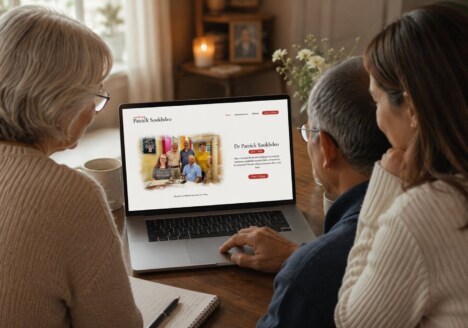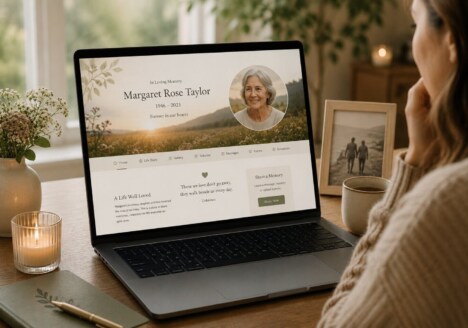
A memorial website can become much more than an online notice or a collection of photographs. With thoughtful Remembrance Website Design, it can offer a calm, welcoming place where family members return to remember, contribute, and feel connected to a person whose influence continues. The most successful memorial spaces are shaped around real family habits: the stories people tell repeatedly, the details that are easily forgotten, and the occasions when someone wants to share a memory without having to explain its importance.
Good Memorial Web Design begins by recognising that remembrance is personal and ongoing. A page may be visited during a birthday, an anniversary, a quiet Sunday afternoon, or a moment when a relative wants to introduce a child to someone they never met. Designing for those different circumstances means creating a site that feels gentle and easy to use, while still giving every part of a life enough room to be represented.
Start with the people who will return
A memorial website should be planned around its visitors rather than around a list of features. Close family may want a private-feeling space for longer stories, while friends and wider relatives may look for a simple way to leave a message or share a photograph. Younger family members may discover the site years later and need clear context, captions, and an inviting structure that helps them understand the person behind the dates.
This is why the opening section matters. A warm introduction, a well-chosen portrait, and a short explanation of what visitors can find on the site can make the experience feel immediately human. Navigation should use familiar language such as “Life Story”, “Memories”, “Gallery”, and “Messages”, avoiding complicated menus that make visitors think about the website instead of the person it honours. A carefully structured memorial web space can also leave room for memories to grow naturally over time.
Give everyday memories the same care as milestones
Major events are important, but they rarely tell a complete story on their own. Families often remember a particular phrase, a favourite route, a way of welcoming guests, a treasured recipe, or a small act of kindness. These ordinary details can be the moments visitors most want to find, because they make a life feel recognisable and close.
Remembrance Website Design can encourage this richness by using flexible content sections rather than a single formal biography. A timeline might sit alongside themed collections such as “Family”, “Work”, “Places”, “Music”, or “Things They Loved”. Short captions beside photographs help preserve context, while audio, scanned letters, and links to meaningful locations can add texture. The aim is not to fill every space, but to make it easy for different people to contribute the details they uniquely remember.
It is also worth considering how content will be revisited. A strong remembrance website for stories that need time does not pressure a family to complete everything at once. It offers a clear foundation and allows new memories, photographs, and reflections to be added when people feel ready.
Make sharing feel safe, simple and considered
Inviting contributions is one of the most valuable parts of a memorial website, but the process should feel reassuring. A contribution form needs clear prompts, readable text, and a gentle explanation of what happens after a message or image is submitted. Families should understand whether contributions are moderated, who can view them, and how they can request a correction or removal later.
Small design decisions make a significant difference. A generous text area gives visitors permission to write more than a sentence, while optional prompts can help someone begin: “What do you remember most clearly?” or “Where did you share a memorable moment?” Image uploads should explain acceptable formats and provide a useful preview. On mobile devices, buttons and form fields need enough space for comfortable use, particularly when a visitor may be emotional or distracted.
Privacy should be part of the design from the beginning. Some families will want a public tribute, while others may prefer selected pages or a private sharing arrangement. A considered Memorial Web Design approach makes those choices visible and understandable, helping the site remain a respectful space rather than an uncontrolled archive.
Design for the memories still to come
The best memorial website is not finished on launch day. It becomes more valuable as relatives add context, correct details, discover old photographs, and share stories that surface through conversation. A flexible structure makes this possible without forcing the family to redesign the site every time a new contribution arrives.
That long-term view also means choosing a visual style with emotional durability. Soft contrast, readable typography, restrained animation, and meaningful imagery can create an atmosphere that feels appropriate years from now. Accessibility matters just as much: clear headings, descriptive image text, strong colour contrast, keyboard-friendly controls, and responsive layouts ensure that more people can participate in remembrance.
Creating a memorial website is ultimately an act of care. It gives people a place to pause, remember, and add their own piece to a shared story. By combining a calm visual experience with thoughtful organisation and easy contribution, a site can support families through anniversaries, new generations, and all the ordinary days when someone is missed. For further inspiration, explore how Memorial Web Design can give shared memories a lasting shape while keeping the focus on the people and relationships that matter most.