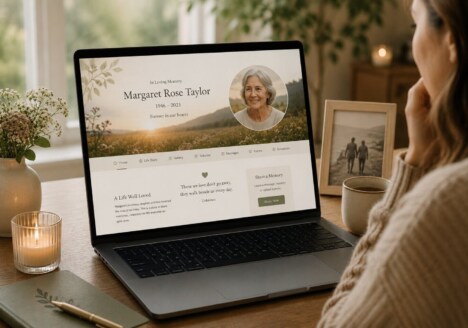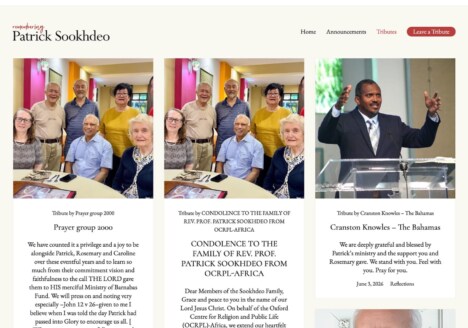
A remembrance website has a quiet responsibility: it should give people somewhere meaningful to return to, while leaving room for each person to remember in their own way. Families do not carry a life story as one neat timeline. They remember through photographs, sayings, recipes, places, music, milestones and small details that might otherwise disappear. Thoughtful Remembrance Website Design can bring these different fragments together without making the experience feel formal or impersonal.
The best memorial web spaces are not simply online noticeboards. They become considered digital rooms where relatives can pause, contribute and discover something new. Good design makes that possible through a calm visual language, clear navigation and content structures that respect the emotional nature of remembrance. It also recognises that the website may be visited by someone who knew the person for decades, or by a younger family member meeting their story for the first time.
Making room for different ways of remembering
One person may want to write a long tribute, while another may prefer to add a single photograph with a short caption. Someone might remember a much-loved hobby, and someone else might hold on to a funny phrase or an everyday habit. A memorial website should welcome all of these contributions rather than suggesting that there is one correct way to take part.
This is where a flexible content structure matters. Separate areas for memories, photographs, messages and important dates can help visitors understand where their contribution belongs, while still allowing the overall story to feel connected. A well-planned memorial web design approach can make the space feel organised without turning it into a rigid archive.
Visitors should also be able to browse at their own pace. Some will arrive looking for a particular story; others will simply follow a photograph or a familiar name. Short introductions, descriptive headings and meaningful captions make the website easier to explore, especially when the collection grows over time.
Creating a visual atmosphere that feels personal
Memorial design does not need to rely on predictable dark colours or overly solemn imagery. The right atmosphere usually comes from details that reflect the individual: a favourite colour used gently in the interface, a landscape that recalls a special place, or typography that feels warm and easy to read. The design should support the content rather than competing with it.
Photography is often the emotional centre of a remembrance website, so images need space to breathe. A carefully considered gallery can show formal portraits alongside ordinary moments: a garden in summer, a family meal, a treasured vehicle or a well-worn chair. These apparently small images often help visitors feel close to the person behind the dates and milestones. A remembrance website designed around meaningful details can preserve that sense of presence.
Accessibility is part of the same care. Clear contrast, readable text, descriptive image labels and simple controls allow older relatives and visitors using assistive technology to take part. A personal memorial should not be difficult to use at the moments when someone most wants to visit it.
Supporting connection across generations
A memorial website can help a family share knowledge that might otherwise remain in separate conversations. A grandchild can learn the story behind a photograph. A cousin can add a memory from childhood. Someone living far away can take part in an anniversary or leave a message when visiting in person is not possible. The website becomes a bridge between memories held in different households.
To support that connection, the site should make contributions feel safe and straightforward. Explain how visitors can send a story, add a photograph or suggest a correction. If contributions are moderated, describe that process in welcoming language. People are more likely to share when they understand what will happen to their words and when the interface does not feel like a complicated form.
It can also help to create gentle prompts. Questions such as “What did they always make time for?” or “Which ordinary moment do you remember most clearly?” can unlock stories that a blank message box might not invite. These prompts turn the website into an ongoing conversation between generations rather than a finished page.
Designing for anniversaries and everyday visits
Remembrance is not limited to one date in the calendar. Families may visit the website on a birthday, an anniversary, a holiday or an ordinary afternoon when a memory surfaces unexpectedly. A thoughtful layout can acknowledge important dates while keeping everyday memories visible too. A simple timeline, a collection of annual messages or a rotating selection of photographs can give returning visitors a fresh path into the story.
The website should feel just as considered on a phone as it does on a larger screen. Many visitors will open it while travelling, visiting a meaningful place or sharing a memory with someone beside them. Fast-loading images, generous spacing and navigation that remains clear on smaller displays all contribute to a calmer experience. Designing a memorial website for the people who keep memories alive means thinking about these real moments of use.
A digital home that can grow with a family
The most valuable remembrance websites are allowed to develop. New stories may appear years later, photographs may be identified, and younger relatives may add their own perspective as they grow older. This does not mean the design needs to change constantly. It means the foundations should be flexible enough to hold new contributions without losing the warmth and clarity established at the beginning.
Remembrance Website Design works best when it balances permanence with openness. It preserves what matters, but it does not close the story. By giving every visitor an understandable way to look, listen and contribute, a memorial website can become a lasting shared space: one that honours a life while helping the people who loved them stay connected through the memories they continue to carry.