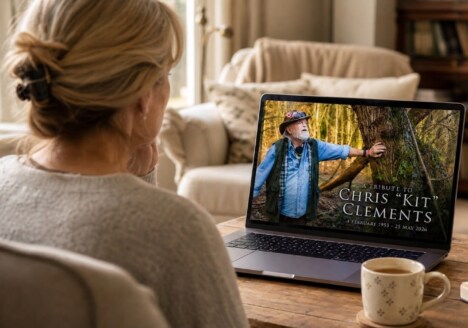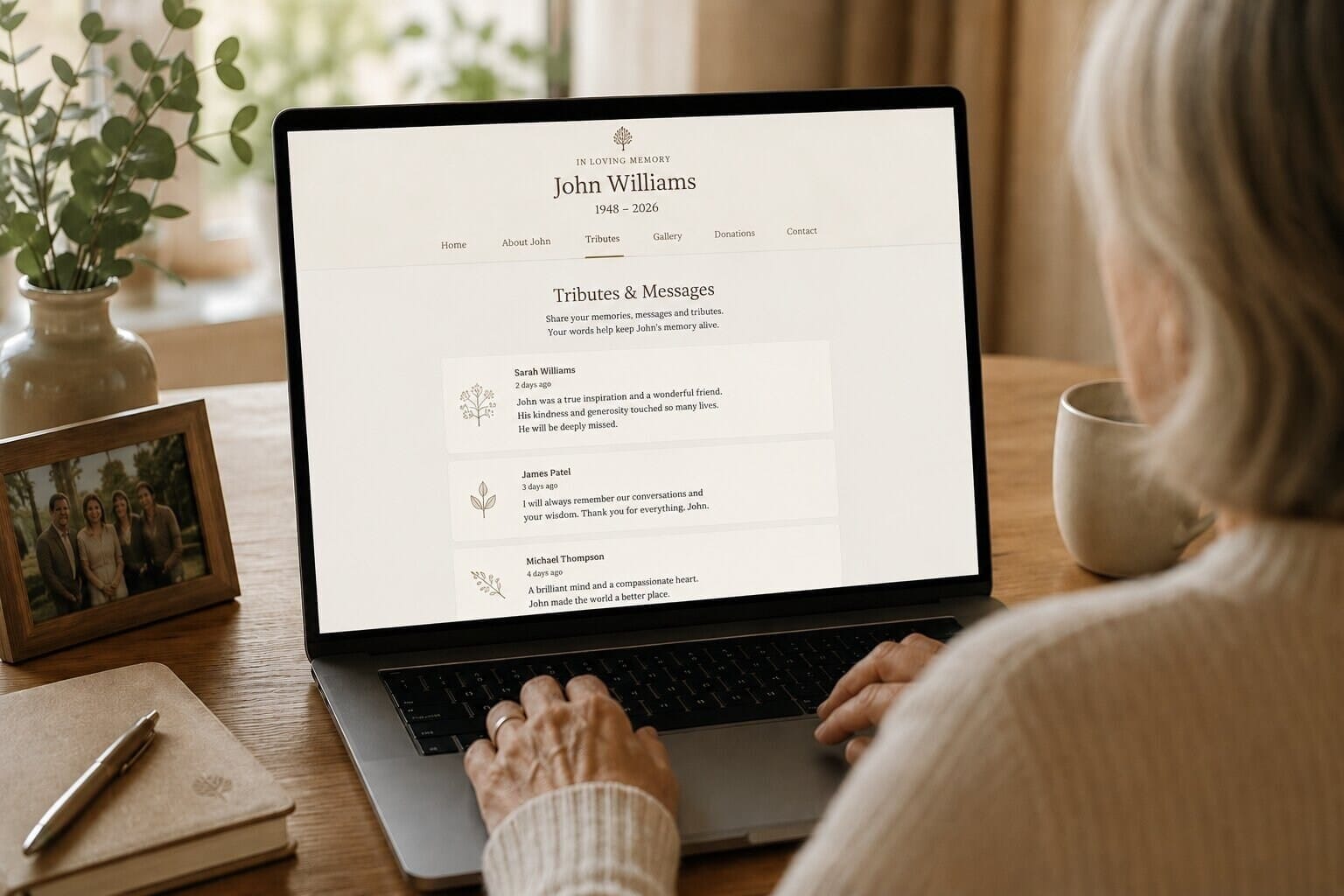
A memorial website can become more than an online announcement or a place to collect photographs. With thoughtful remembrance website design, it can offer families a calm, enduring space to revisit a life in their own time. People may arrive there on an anniversary, after finding an old letter, or simply because a familiar memory has surfaced. The design should make each visit feel natural, personal and unhurried.
That means building around the way remembrance actually works. Memories do not arrive in neat categories, and every visitor brings a different relationship to the person being honoured. A useful memorial web design gives those differences room while keeping the experience simple enough for anyone to use.
Start with the moments people will want to revisit
The strongest memorial websites are shaped by real moments rather than a long list of features. A short story about a favourite walk, a recipe, a voice recording or a photograph from an ordinary afternoon may matter as much as a formal biography. Those details help visitors recognise a complete person, not just a date range or a collection of achievements.
Before choosing layouts, it helps to ask what the family may return to in six months or ten years. A clear timeline can hold major chapters, while a smaller gallery or “everyday memories” section can protect the details that might otherwise disappear. This approach echoes the value of preserving the details families never want to lose, from familiar expressions to the places and routines that made a life recognisable.
Make the website welcoming to different kinds of contributors
One person may write polished paragraphs, while another may only feel able to add a caption, a scanned card or a few lines remembered from childhood. A memorial website should treat all of these contributions as meaningful. Clear prompts, generous spacing and an uncomplicated way to share material can help relatives take part without feeling that they have to become writers or photographers.
It is also worth considering visitors who knew the person in different settings. Colleagues may remember a quiet kindness at work; neighbours may remember practical help; younger family members may have a handful of vivid, recent moments. A flexible structure allows these voices to sit beside one another. The result becomes a shared family space rather than a single authorised version of someone’s story.
Use visual design to create calm and focus
Memorial design does not need to be sombre in every detail. A restrained colour palette, readable type and carefully selected imagery can create a feeling of warmth without competing with the content. Strong contrast and comfortable text sizes matter particularly because visitors may read on a phone, return late at night, or share the site with someone who finds complex interfaces tiring.
Photography deserves similar care. A small number of well-placed images often creates more connection than a crowded grid. Captions can explain where a photograph was taken or why it matters, giving visitors a reason to pause. Subtle navigation, descriptive link text and a consistent page rhythm help the memories remain the focus.
Leave room for remembrance to continue
A memorial website should not feel finished on the day it launches. Families often discover new photographs, letters and stories gradually, especially after conversations with relatives who live elsewhere. Designing for additions means choosing a structure that can grow without becoming confusing: a chronological archive, themed story collections and clearly labelled galleries can all work well when they remain easy to browse.
Growth can also include new rituals. Visitors may want to light a virtual candle, add a note on a birthday, or return to a collection of messages at a difficult time. As explored in keeping family traditions close through remembrance website design, the most useful digital spaces support familiar acts of connection without forcing every visitor into the same pattern.
Design for privacy, care and long-term trust
Sharing memories online requires a thoughtful conversation about boundaries. Families should decide which photographs are public, whether contact details should be hidden, and who can add or edit content. A clear privacy approach protects vulnerable visitors and gives contributors confidence that their words will be treated respectfully.
Long-term trust also depends on practical details. The site should be straightforward to maintain, readable across devices and organised so that important content is not buried. Accessible headings, useful alternative text for images and predictable navigation are not decorative extras; they help more people take part in remembrance.
Let the memorial website feel like an open door
The best memorial websites do not try to tell visitors what they should feel. They offer an open door into a life, with enough guidance to make exploring easy and enough space for private reflection. A quiet welcome, a meaningful photograph and a few carefully arranged stories can create an experience that feels human from the first visit.
When a family designs with future visitors in mind, the website can become a place of return rather than a one-time project. It can hold the stories people already know, invite the memories still waiting to be shared, and give different generations a way to meet the same life from their own perspective. That is the lasting value of designing around the ways families remember: the site becomes a living expression of connection, shaped with care and revisited whenever someone needs to feel close.